
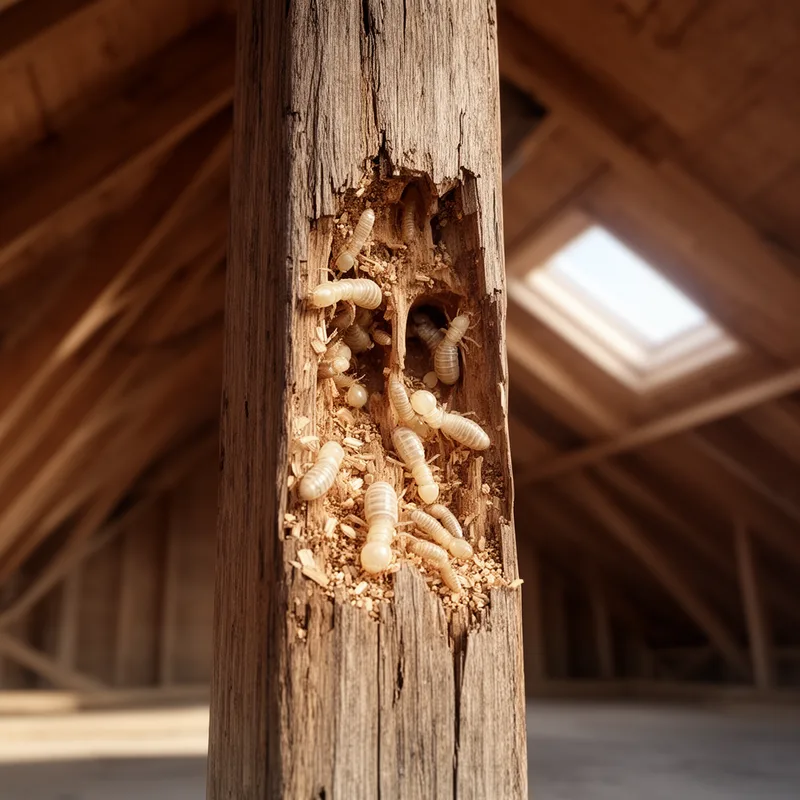
dry-wood termite
- noun
- /draɪ wʊd ˈtɜrmaɪt/
- Specialized
- The house was seriously damaged by an infestation of dry-wood termites.
Examples
-
Unlike subterranean species, dry-wood termites do not require contact with soil.
-
Exterminators found evidence of dry-wood termite activity in the attic rafters.
-
The dry-wood termite infested the old wooden beams.
-
Have you seen a dry-wood termite before?
-
Exterminators found evidence of dry-wood termite activity in the attic rafters.
-
The house was seriously damaged by an infestation of dry-wood termites.
-
Unlike subterranean species, dry-wood termites do not require contact with soil.
Synonyms

 63
2.9
63
2.9

A small pale insect that lives in large groups, eats wood, and damages houses

A small insect that lives in wood and damages houses and furniture in warm places
A small insect that bores into dry wood in houses and leaves powdery dust

A small insect that lives in and eats dry wood, often damaging furniture
An insect or small animal like a beetle that makes holes in wood and damages it
Surface Forms
Morphology
dry-wood + termite
The meaning is directly compositional: 'dry' + 'wood' + 'termite' denotes a termite that lives in or eats dry wood. This noun–noun compounding pattern (with hyphenation) is productive and cross-linguistically common, so a B1 learner who knows the constituents will readily infer the intended meaning.
Etymology
Dry-wood termite is a literal name for termites that live inside dry pieces of wood, like attic beams, and eat the wood without touching the ground. So the parts dry and wood point to their living place, and the name means a termite that lives in 'dry' wood rather than in the soil.