
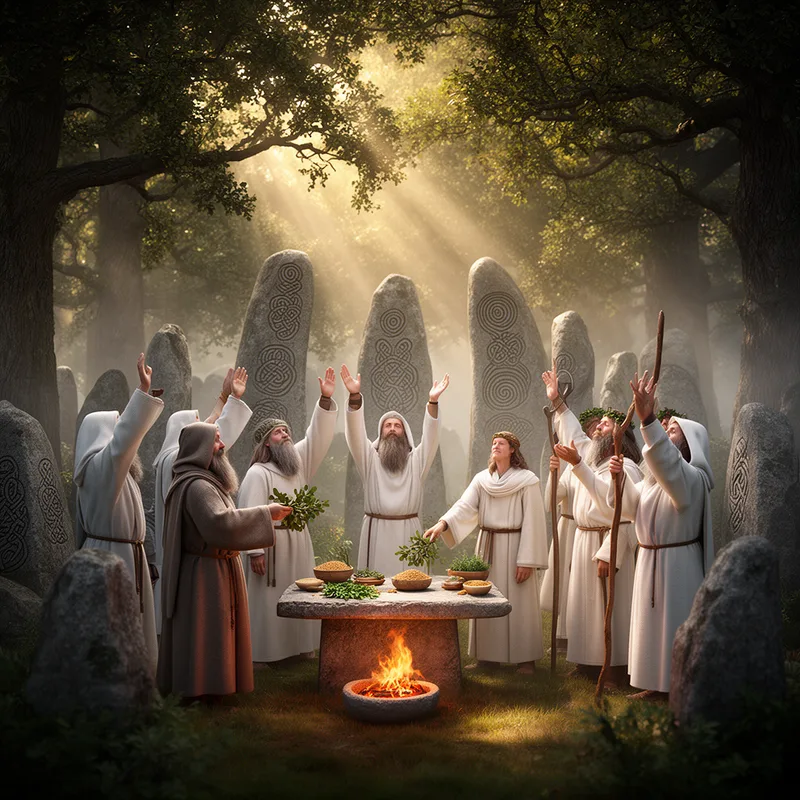
druidism


 1
9.9
- noun
- /ˈdruːɪdɪzəm/
- The study of druidism reveals a rich tapestry of beliefs about life, death, and the natural world.
Examples
-
Druidism, or at least its practical effects on the Welsh people, endures for centuries beyond its ostensible extrusion (despite the theological differences between Druidism and its successor, Christianity).
Academic text (2016) -
Druidism, or at least its practical effects on the Welsh people, endures for centuries beyond its ostensible extrusion (despite the theological differences between Druidism and its successor, Christianity).
Academic text (2016) -
Oddly, having looked in some depth at Druidism, modulo the human sacrifice, it wasn't all that crazy.
Blog text (4) -
"The religion of the time" in the sixth century, Peacock declares, "was Christianity grafted on Druidism" (Misfortunes, 42).
Academic text (2016) -
In The History and Origins of Druidism, Lewis Spencer writes about the Druids, stating they burned their victims in holy fire, which had to be consecrated by a Druid priest.
Blog text (18) -
Thunderhorse's teachings are a mishmash of Native American religion and other New Age favorites, such as Tibetan Buddhism, Taoism, and Ancient Druidism.
Academic text (2000) -
Many modern Pagans draw inspiration from druidism in their spiritual practices and rituals.
-
Ancient druidism involved a deep reverence for nature and the changing seasons.
Synonyms
 1
9.9
A modern spiritual practice inspired by ancient druids that honors nature
Surface Forms
Morphology
Etymology
Druidism comes from an old Celtic word made of dru- 'oak' and -wid 'to know', so a druid was an 'oak-knower' or a wise person connected to oak trees. That's why druidism refers to the religious beliefs and rituals that these nature-linked leaders practiced.