
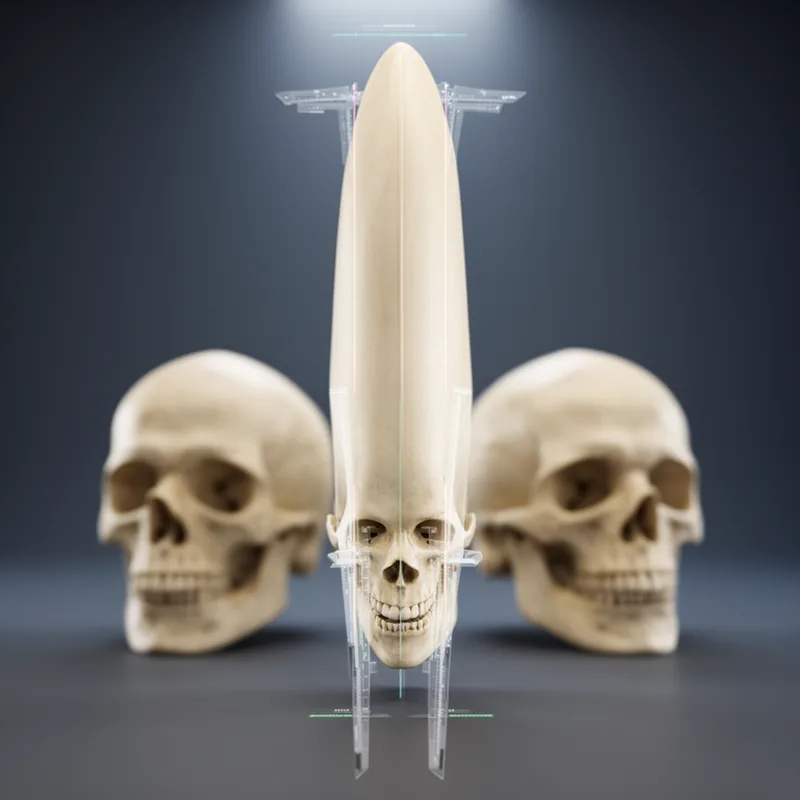
dolichocranic
- adjective
- /ˌdoʊlɪkoʊˈkrænɪk/
- Specialized
- In the study, most of the ancient skeletons were identified as dolichocranic.
Examples
-
The dolichocranic skulls were studied for anthropological research.
-
Early anthropologists often classified populations as dolichocranic based on skull measurements.
-
The dolichocranic form is characterized by a long and narrow head.
-
Is this dolichocranic shape common in certain populations?
-
Anthropologists often study dolichocranic skulls to learn more about human evolution.
-
Certain populations in Africa are known to have dolichocranic features due to their genetic heritage.
-
The museum exhibit included a dolichocranic specimen, demonstrating the variation in human skull shapes.
Synonyms



 1
9.9
1
9.9
Having a long, narrow head, like a Greyhound
Having a long, narrow skull
Having a head that is longer than it is wide
Antonyms

- Specialized
A person who has a short, wide head that is almost as wide as it is long
How Long
- Specialized

- Specialized
Surface Forms
Morphology
Etymology
The word dolichocranic comes from Greek parts dolicho- meaning 'long' and cranium meaning 'skull'. So it means 'long skull', which is why we use it to describe a long, narrow head.