
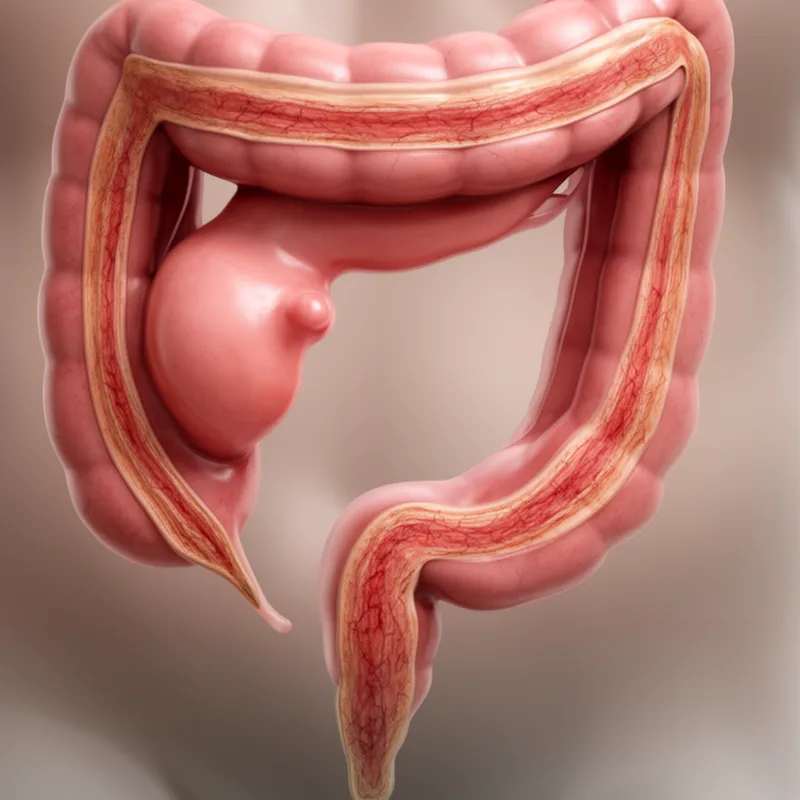
diverticulum
 2
9.9

- noun
- /ˌdaɪvɜrˈtɪkjʊləm/
- Specialized
- Figure: CT scan shows that the tracheal diverticulum is located on the right posterior, lateral to the distal trachea.
- tracheal diverticulum
- Meckel diverticulum
Examples
-
Meckel diverticulum is the most common congenital anomaly of the gastrointestinal tract, occurring in 2%-3% of the population.
Academic text (2007) -
The preliminary endoscopy revealed a duodenal diverticulum in nine patients (BE five, DC four).
Academic text (2000) -
Acquired tracheal diverticulum is a rare clinical entity with only limited reports in the literature.
Academic text (2008) -
In this case, the diverticulum was observed 2 years after surgical management of a retropharyngeal abscess.
Academic text (2008) -
We report a case of a tracheal diverticulum that was identified as part of a workup for a worsening cough.
Academic text (2008) -
The present case demonstrates the identification of a tracheal diverticulum on a CT scan obtained two years after surgical drainage of a retropharyngeal abscess.
Academic text (2008) -
In Meckel diverticulum, a small portion of the vitelline duct persists, forming an outpouching.
Academic text (2007) -
Tracheal diverticulum, also referred to as tracheocele, is typically discovered as an incidental finding on a radiograph, on endoscopy, or during a postmortem examination.
Academic text (2008) -
The 1.5-1.4 cm tracheal diverticulum was located on the right posterior, lateral to the distal trachea (figure).
Academic text (2008) -
Meckel's diverticulum is a congenital pouch that can cause complications in the intestines.
Compounds

- Specialized

 1
8.9
A pouch in the lower part of the small intestine present from birth that can cause bleeding or pain
How Big
- Specialized
2
9.9

- Specialized
8
4.6
Surface Forms
Etymology
Diverticulum comes from the Latin root divert-, which means 'to turn aside', and you can see the same root in the English word divert. Think of a diverticulum as a small 'turn' or side path off the main tube of the intestine, so it is a little pouch that sticks out from the organ.