

distally
 1
8.2
1
8.2

- adverb
- /ˈdɪstəli/
- Specialized
- The trachea and esophagus receive sensory innervation from branches of the vagus nerve distally.
- especially distally
- more distally
Loading YouTube…
Watch on YouTubeAnd you're not putting that pressure really distally right on that last digit because that's where the, that FDS muscle is most strained.
- And you're not putting that pressure really distally right on that last digit because that's where the, that FDS muscle is most strained.
Examples
-
The TG begins at the level of the 10th cross-section (CS-10) below the IGS, independent of the length or mass of the residuum, and proceeds distally over 25 percent of the residuum length.
Academic text (1992) -
Nurses should ensure that sensation is intact to light touch distally, especially in the early postoperative period.
Academic text (2006) -
The cannulation was continued as far distally as possible.
Academic text (1999) -
The flap is extended distally until it is 1 cm to 2 cm in length.
Academic text (2011) -
In general, a more tapered limb has less tissue, and the contact surface area is decreased distally.
Academic text (1996) -
By clinical examination, he had a very bony stump with little soft tissue, especially distally.
Academic text (1993) -
For a more tapered limb, there is greater contact area proximally than distally.
Academic text (1996) -
The tibial residuum moved 10 mm distally relative to the prosthesis internal wall.
Academic text (2001) -
Subject #1 had a very bony residual limb with little soft tissue, especially distally, and he did not distal end-bear.
Academic text (1992) -
The doctor explained that the nerve damage was most severe distally, affecting the toes and feet.
Antonyms
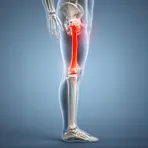
How Apical

Surface Forms
Morphology
Etymology
Distally comes from Latin parts dis- 'apart' and stare 'to stand', so it originally meant 'to stand apart'. It shares the same root as distant and distance, which helps you remember that distally means 'away from the center' or 'far from the point where something is attached' in anatomy.