
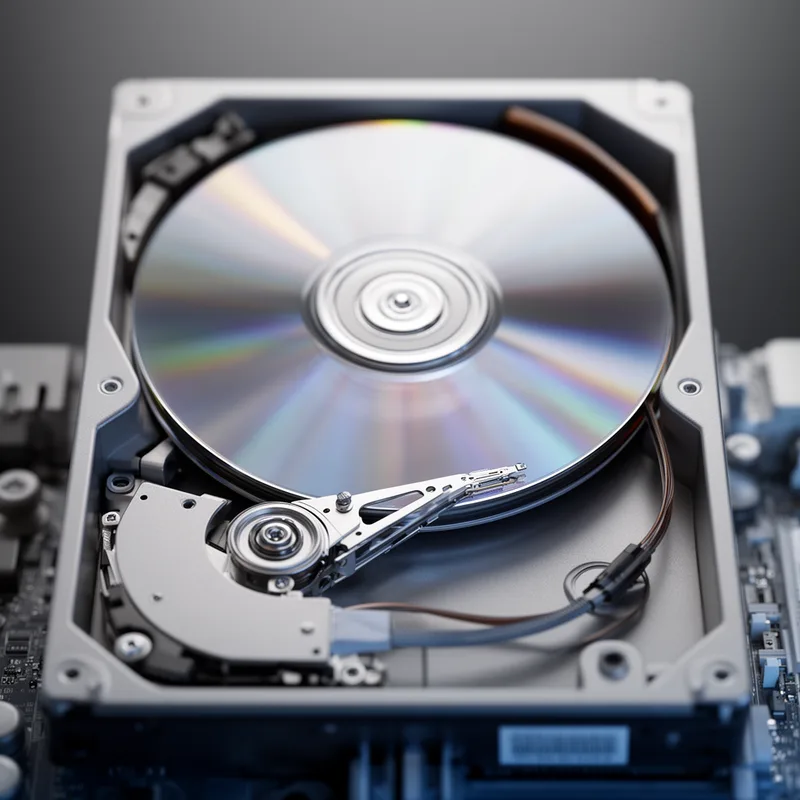
disk drive
 6
3.5
6
3.5

- noun
- /dɪsk draɪv/
- Specialized
- After the upgrade, the disk drive was able to store much more data than before.
- hard disk drive
- optical disk drives
- magnetic disk drives
Loading YouTube…
Watch on YouTubeAnd so the idea behind write amplification is you send so much information to a hard disk drive and that data is written directly to the hard disk drive.
- And so the idea behind write amplification is you send so much information to a hard disk drive and that data is written directly to the hard disk drive.
- Let's see if the disk drive actually wants to work.
- And it would like the disk drive or the tape drive, like every single step was contemplated because if you didn't, you lost maybe a ton of work.
- And sometimes you have to remove the floppy disk drive or whatever the I forgot all the crazy stories of Steve Jobs, like making wild design decisions.
Examples
-
Make sure to insert the CD into the disk drive so the software can install.
-
Normally you can hear the noise from the disk drive straight away.
-
The disk drive sounds funny.
-
Let's see if the disk drive actually wants to work.
-
Most instruments use an internal 3.5" disk drive for this purpose.
Academic text (1992) -
The bandwidth of a disk drive grows with the square root of its capacity.
-
Large servers often attach hundreds, even thousands of disk drives to meet the demands of commercial workloads.
Academic text (2000) -
The lab is quite large, comprising banks of processors, disk drives, test bays, and prototype assembly areas.
Fiction book (1991) -
The computer's disk drive quickly read the files from the optical disk.
Synonyms
 272
3.3
272
3.3
A device that stores or reads data on a computer
 106
2.8
106
2.8
A device inside a computer that stores files and lets you open them
 5
3.5
5
3.5
A thing that stores computer files, like a hard drive or USB stick
Surface Forms
Morphology
The meaning is directly and compositionally derived from 'disk' (a storage medium) plus 'drive' (a device that reads/writes), forming a standard noun–noun compound meaning 'a device for disks.' This is a transparent, cross-linguistically common composition that a B1 learner who knows both constituents would readily infer.
Etymology
The noun disk drive comes from the two parts inside older computers: a round disk and a part called drive that turns the disk. Picture the disk spinning so the machine can 'store' and 'read' your files, and that's why disk drive means 'a device that holds and spins a disk to store and read information'.