
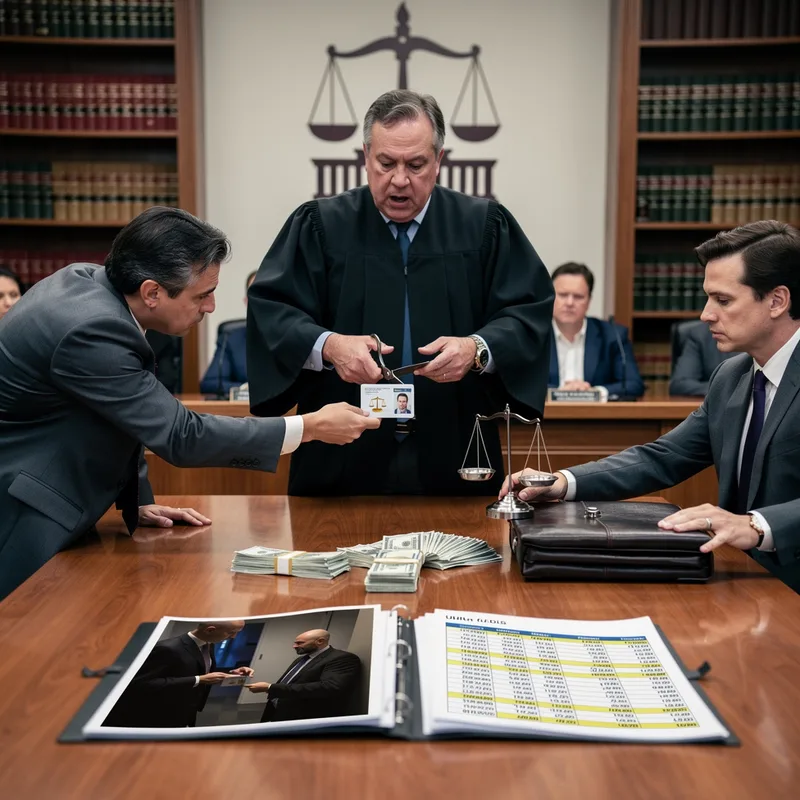
to disbar
 32
8.3

- verb
- /dɪsˈbɑr/
- Specialized
- If the allegations are true, they will have no choice but to disbar her from practicing law.
Loading YouTube…
Watch on YouTubeWho's been almost disbarred at this point.
- Who's been almost disbarred at this point.
Examples
-
They're going to disbar me.
-
He did not appear in person or otherwise fight the effort to disbar him.
Academic text (2003) -
They want to disbar him for allegedly playing fast and loose with clients' money.
-
The New Jersey Supreme Court voted 4-3 not to disbar him under the mandatory disbarment rule for taking client funds.
Academic text (2003) -
A history of dishonesty could get you disbarred as well as any pattern of violation of the professional code of ethics.
-
The committee decided to disbar the lawyer after finding evidence of fraud.
-
He was surprised to hear that the court will disbar him for violating ethical guidelines.
Antonyms

How Severe
- Specialized
32
8.3

- Formal
246
4.2
- Formal
47
7.4
- Formal
33
6.1
∞
1.0
Surface Forms
Morphology
Etymology
The word disbar comes from dis- meaning 'away' and bar, the 'barrier' or place in a courtroom that stands for the group of lawyers. So, to disbar someone is to take them 'away' from the bar, which means to stop them from being a lawyer.