
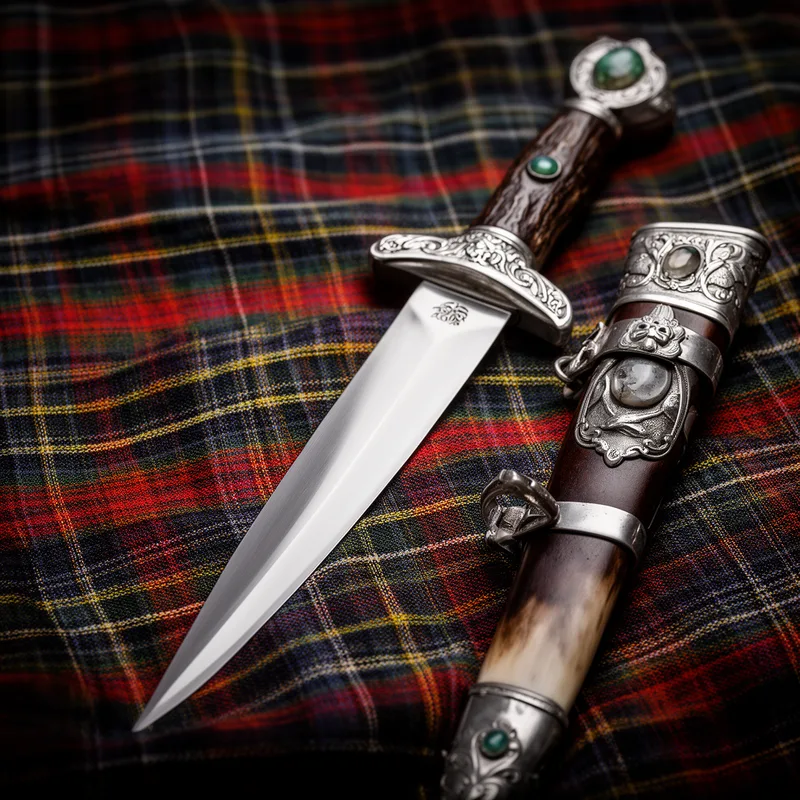
dirk
 14
9.9
14
9.9

- noun
- /dɜrk/
- Combatants resorted to the use of knives, pistols, dirks, and bludgeons to maim and kill one another.
Examples
-
His left hand dropped to his belt, and he drew the dirk in a motion like water pouring from a glass.
Fiction book (1991) -
I saw Dougal draw Jamie's dirk from its sheath and wondered why.
Fiction book (1991) -
The midshipman's dirk will be lying on the table before Lord Hood.
-
A howl of pain and a clatter followed as the dirk fell from his nerveless fingers.
Fiction book (1992) -
Dougal drew his dirk with a flourish and sank to one knee, holding the dirk upright by the blade.
Fiction book (1991) -
Carefully, Theron hissed, sliding a dirk from under the daybed's cushions.
Fiction book (1992) -
The soldier drew his dirk and prepared for the duel.
-
In ancient Scotland, warriors often carried a dirk as part of their traditional attire.
-
The collector proudly displayed his collection of dirks from various historical periods.
Synonyms
 1
9.9
1
9.9
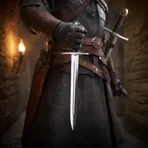
A small pointed knife used as a weapon
 1
9.9
1
9.9
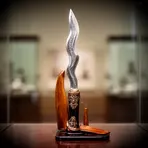
A small traditional knife from Malaysia or Indonesia with a wavy blade

 1
9.9
1
9.9
A small pointed knife used as a weapon
 1
9.9
1
9.9
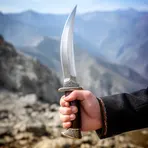
A short curved knife that people use as a weapon in the Caucasus

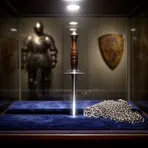
A small old knife with a short pointed blade that collectors keep and museums show
How Long

Surface Forms
Etymology
Dirk comes from an old northern European word meaning 'dagger', related to German Dolch and similar words in Dutch and Old Norse. That's why a dirk is the long, straight dagger once carried at a Highlander's side.