
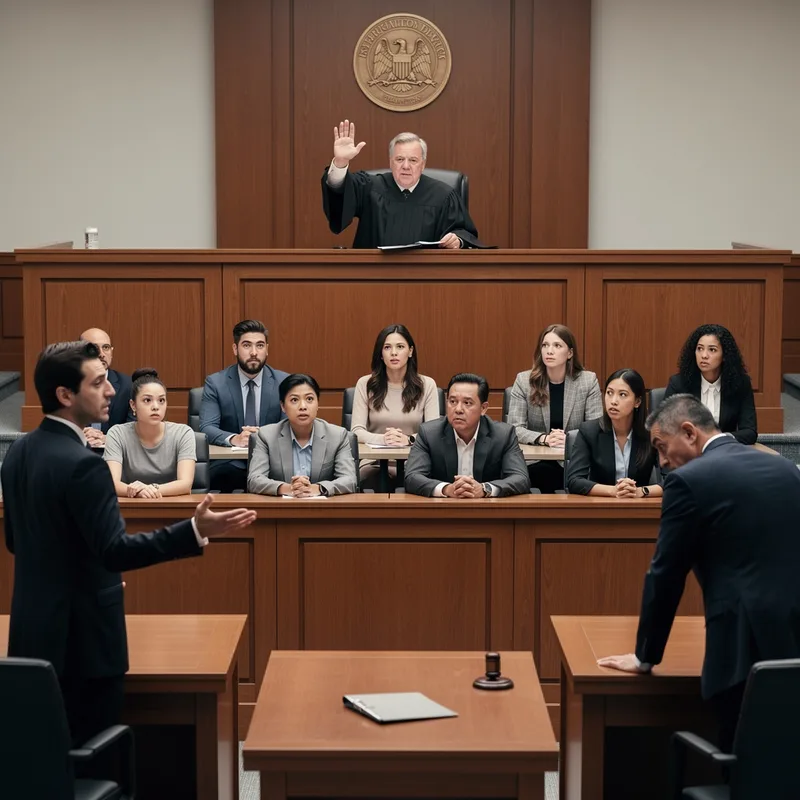
directed verdict
 3
9.9
3
9.9

- noun
- /dɪˈrɛktɪd ˈvɜrdɪkt/
- Formal
- * Includes summary judgments, default judgments, dismissals, and directed verdicts.
- directed verdict for dismissal
- directed verdict of acquittal
- directed verdict in favor
Examples
-
The prosecution rested its case late Friday morning, and when they resumed after lunch, the defense moved for a directed verdict of acquittal.
Fiction book (2000) -
Your Honour, on that basis, I'd like to move for a directed verdict of not guilty.
-
The trial court agreed, issuing a directed verdict in its favor.
Academic text (2009) -
He's going to talk to his boss to decide what they want to do before the judge comes down with a directed verdict.
-
And I'd like to move at this time for an immediate directed verdict for dismissal.
Fiction book (1997) -
We'll take a recess, and when we return, if Ms. Bingum doesn't have a legal defense, I will issue a directed verdict.
-
After prosecutors rested, Samuel argued for a directed verdict, saying there was insufficient evidence for the case to reach the jury.
-
The trial court agreed, issuing a directed verdict in its favor.
Surface Forms
Morphology
The phrase is partially analyzable from its parts: a B1 learner who knows 'directed' and 'verdict' can infer it is a verdict that has been ordered or imposed by someone (likely an authority). However, the specific legal/procedural sense — that the judge orders the verdict without jury consideration because of insufficient evidence — is a specialized, language- and register-specific meaning that is not fully predictable from the constituents alone.
Etymology
Directed verdict comes from a courtroom picture: the judge literally directs the outcome and tells the jury the verdict instead of letting them decide. That's why it means 'a verdict ordered by the judge', often because there is not enough evidence for the jury to decide.