

direct trust
- noun
- Formal
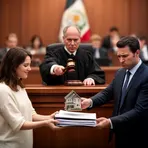
- Unlike an implied trust, a direct trust is established through clear, deliberate action and documentation.
Examples
-
The family set up a direct trust to manage the inheritance for their children.
-
A direct trust can provide clear instructions for asset distribution.
-
Her estate plan includes a direct trust to ensure her assets are distributed according to her wishes.
-
Many people prefer to create a direct trust for their children.
-
Her estate plan includes a direct trust to ensure her assets are distributed according to her wishes.
-
The family set up a direct trust to manage the inheritance for their children.
-
Many people prefer to create a direct trust for their children.
Synonyms

An agreement people make on purpose to hold and manage money or property for someone, usually written down
Antonyms
Surface Forms
Morphology
The meaning is compositionally derived from 'direct' (straight, immediate) modifying 'trust' (a legal arrangement), so a learner who knows both words can infer it denotes a trust created directly by the parties rather than imposed by law. This adjective+noun pattern is a standard, cross-linguistic composition, making the phrase readily understandable without prior specialized exposure.
Etymology
The noun direct trust comes from the image of handing property or papers straight to someone you rely on: direct means a straight, chosen action and trust is the person you believe. So a direct trust is a trust made by that clear action — set up 'on purpose' by the people involved, not created by law.

