
diplacusis
- noun
- /ˌdɪpləˈkjuːsɪs/
- Specialized
- During the consultation, the doctor explained that his diplacusis made it difficult for him to enjoy music, as he heard varying pitches for the same notes.
Examples
-
A 57-year-old male singer with noninsulin-dependent (type 2) diabetes mellitus and primary hyperparathyroidism presented with a complaint of diplacusis in the right ear of 16 months' duration.
Academic text (2009) -
The patient said that the diplacusis was very distracting during his daily activities, although he had been able to overcome the response from his own voice by altering his vocal technique.
Academic text (2009) -
The diplacusis had improved in that fewer pitches were affected.
Academic text (2009) -
Since his previous visit, the diplacusis was much improved; in fact, it had almost disappeared and was no longer a distraction.
Academic text (2009) -
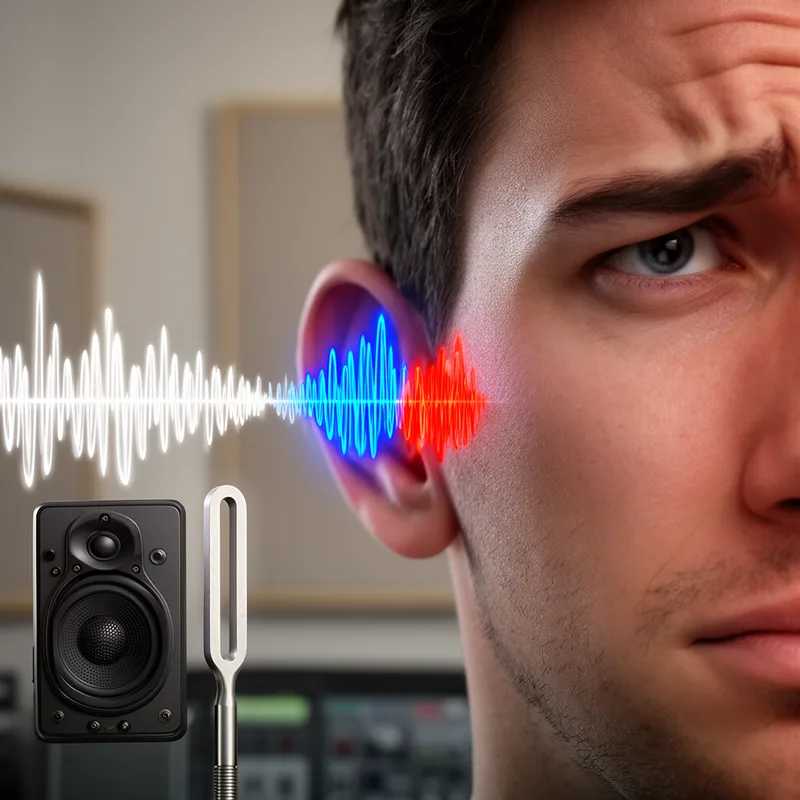
The diplacusis was accompanied by tinnitus, aural fullness, and hyperacusis in the same ear: "The patient described the diplacusis as a harmonic of a fundamental sound in response to external sound and to his own voice."
Academic text (2009) -
The diplacusis was accompanied by tinnitus, aural fullness, and hyperacusis in the same ear: "The patient described the diplacusis as a harmonic of a fundamental sound in response to external sound and to his own voice."
Academic text (2009) -
At follow-up three months later, the patient reported that the diplacusis had become a little worse, the aural fullness more pervasive, and the hyperacusis worse on the days he took the risedronate.
Academic text (2009) -
When the diplacusis was most severe, he would also hear a third sound, either in response to an external sound or as a spontaneous sound that was close to the quality of his tinnitus. "The tinnitus seemed to be triggered by the intake of dairy and salicylate products, and it could be controlled to some degree by avoidance of these substances.
Academic text (2009) -
The musician was frustrated by his diplacusis because it distorted the sound of his own voice during performances.
-
She learned to cope with her diplacusis by focusing on other aspects of her auditory environment while speaking.
Surface Forms
Morphology
diplacusis = dipla + cusis
Formed from Greek combining forms meaning 'double' + 'hearing' (dipla- + -cusis); the medical morphology is technical and not transparent to general learners.
Etymology
The word diplacusis comes from Greek parts diplo- 'double' and -acusis 'hearing', like the word acoustic, so it literally means 'double hearing' and explains hearing one sound as two different pitches in the same ear.

