
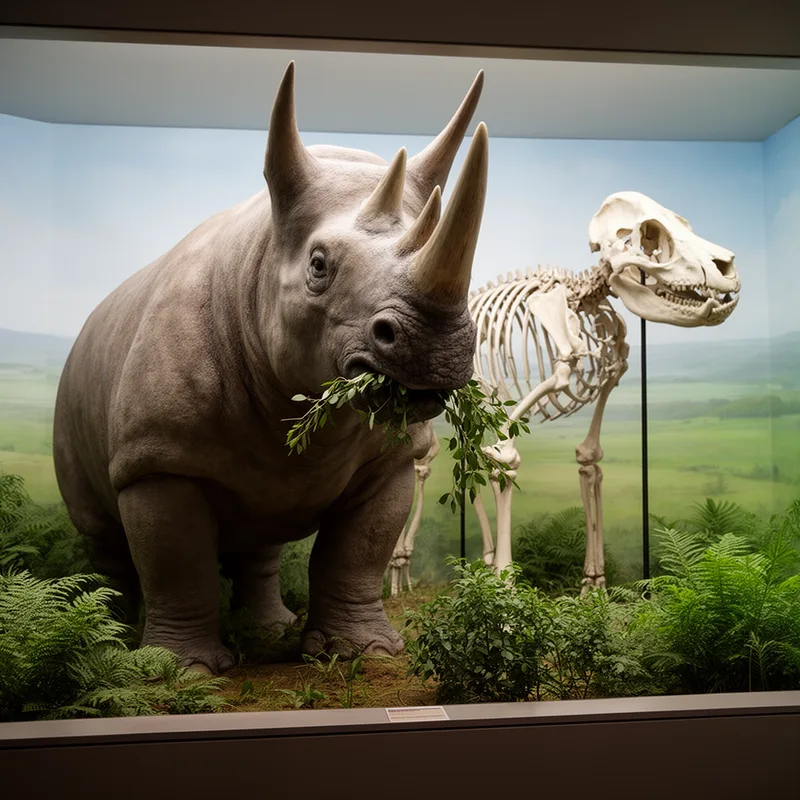
dinoceras
- noun
- /ˌdaɪnəˈsɪrəs/
- Specialized
- Fossils of dinoceras have been discovered in the Eocene deposits of North America.
Examples
-
Scientists believe dinoceras used its horns for display and possibly for defense.
-
The museum exhibited a reconstructed skeleton of dinoceras alongside other prehistoric mammals.
-
The dinoceras roamed the Earth during the Eocene epoch.
-
Many fossils of dinocerases have been discovered in North America.
-
Fossils of dinoceras have been discovered in the Eocene deposits of North America.
-
The museum featured a fascinating display of a dinoceras skeleton next to other ancient mammals.
-
Scientists believe that the large dinoceras used its impressive horns for display during the Eocene.
Surface Forms
Etymology
Dinoceras comes from the Greek words deinos 'terrible' and keras 'horn', so its name means 'terrible horn'. Like dinosaur, the dino- part helps you remember it was a large ancient animal, and the name fits because dinoceras were big, horned mammals.

