

digital-analog converter
- noun
- /ˈdɪdʒɪtəl-ˈænəlɒɡ kənˈvɜːrtər/
- Specialized
- High-quality audio equipment often features a built-in digital-analog converter for improved sound clarity.
Examples
-
The digital-analog converter allows your music player to send audio to standard headphones.
-
I bought a new digital-analog converter for my home theater.
-
Engineers tested the digital-analog converter to ensure accurate signal transmission.
-
The digital-analog converter is essential for high-quality sound.
-
High-quality audio equipment often features a built-in digital-analog converter for improved sound clarity.
-
The digital-analog converter allows your music player to send audio to standard headphones.
-
Engineers tested the digital-analog converter to ensure accurate signal transmission.
Synonyms
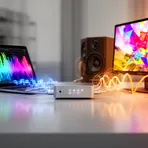
A device that changes digital signals into sound for speakers or images for screens
How Accurate
- Specialized

- Specialized
Surface Forms
Morphology
digital-analog + converter
The phrase is transparently built from its parts: a learner who knows 'digital' and 'analog' and 'converter' (a device that transforms one form into another) can infer it converts digital signals into analogue signals. Although technical and often hyphenated as a term (or seen as 'digital-to-analog converter'), the meaning follows straightforward compositional logic common across languages and is therefore immediately recoverable.
Etymology
The noun digital-analog converter names its job: digital means on/off numbers, analog means smooth waves, and a converter is something that changes one into the other. Imagine tiny on/off numbers being smoothed into a flowing wave so a speaker can make real sound, and this is why the device 'turns' digital data into analog sound or pictures.

