
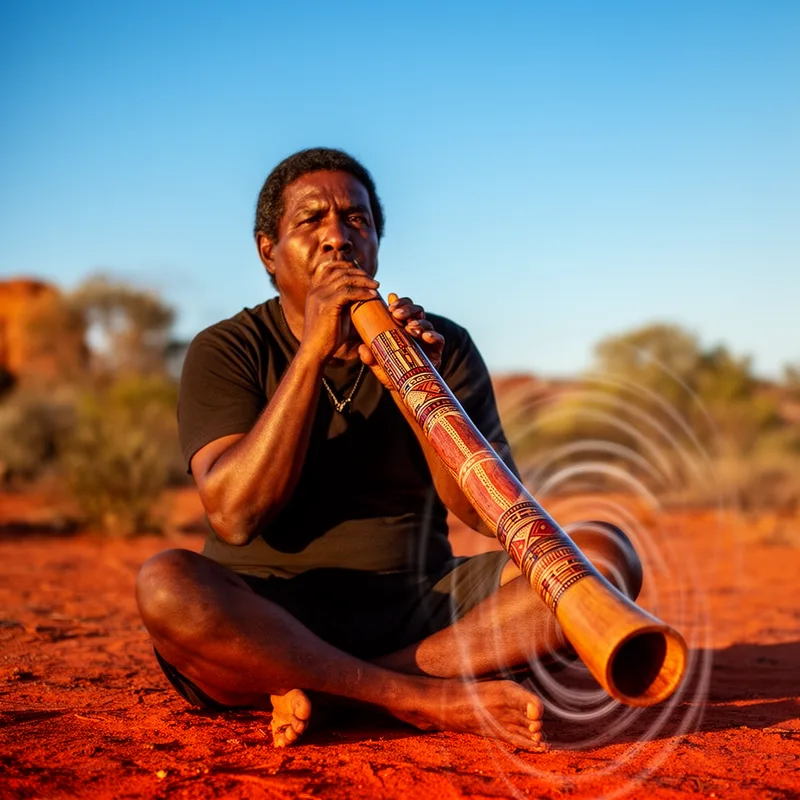
didgeridoo
 5
8.5

- noun
- /ˌdɪdʒəˈridəʊ/
- During the festival, we listened to traditional soundscapes created by the didgeridoo.
- plays the didgeridoo
- didgeridoo player
- didgeridoo, an instrument
Loading YouTube…
Watch on YouTubeOK, kumbaya didgeridoo like OK, I just can't do it.
- OK, kumbaya didgeridoo like OK, I just can't do it.
Examples
-
But cultures also share ceremonial music, from an Australian Aboriginal celebration with its didgeridoo music to an American parade with its John Philip Sousa marches.
Academic text (1992) -
And I have my own didgeridoo.
-
Sounds like an electric didgeridoo.
-
Natividad plays a didgeridoo of his own making.
Blog text (20) -
Hillary borrowed a didgeridoo in order to demonstrate it in class.
Academic text (2006) -
The culture carrier with whom she spoke was Michael Marsolek, an accomplished performer on the didgeridoo.
Academic text (2006) -
Or listen to the barking, almost dissonant notes of didgeridoo on "The Sun is the Mother of the Moon," like a real-world shout launched into the meditative ether.
Blog text (10) -
One time she padded a quartet with two vocalists, an eight-piece horn section, an African drumming ensemble, a didgeridoo, and a harmonium.
Fiction book (1997) -
The musician played a haunting melody on his didgeridoo, captivating the audience.
-
To learn how to play the didgeridoo, I joined a workshop that featured Aboriginal music.
Synonyms
 2
3.1
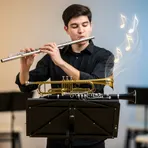
An instrument that makes sound when you blow air through it, like a flute or trumpet
How Low

Surface Forms
Etymology
Didgeridoo probably comes from an Australian Aboriginal word and was made to copy the instrument's low, repeating sound. A helpful way to remember it is to hear the name as didgeri + doo or 'didgeri-doo', which echoes the long, deep drone, so didgeridoo means the long wooden wind instrument used in Aboriginal music.