
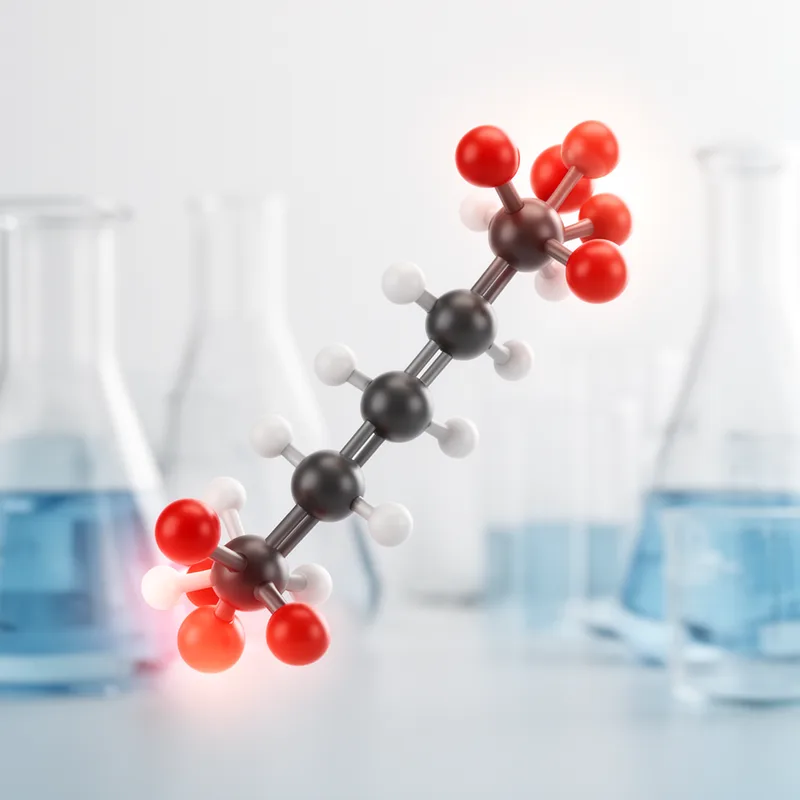
dicarboxylic acid


 1
7.0
- noun
- /ˌdaɪkɑrˈbɑksɪlɪk ˈæsɪd/
- Specialized
- The chemist studied dicarboxylic acid in detail.
Examples
-
The synthesis of nylon involves the use of a dicarboxylic acid as a key reactant.
-
Many dicarboxylic acids are used in food preservation.
-
One common dicarboxylic acid used in chemistry is oxalic acid.
-
Phthalic acid is an aromatic dicarboxylic acid important in industrial applications.
-
Many polymers are made from dicarboxylic acids, which provide essential chemical properties for industrial applications.
-
The chemist synthesized a new type of dicarboxylic acid that showed promise in creating biodegradable plastics.
-
Dicarboxylic acids are commonly used in the production of adhesives and sealants due to their reactivity.
Surface Forms
Morphology
The term is fully compositional: 'di-' (=two) + 'carboxylic' (having carboxyl groups) + 'acid' (a substance with acidic groups) directly yields 'an acid with two carboxyl groups.' Although it's technical, the morphological pieces transparently indicate the meaning and similar chemistry terms exist across languages, so a learner who knows the constituent parts can infer the definition.
Etymology
Dicarboxylic acid literally names a molecule with two acid parts. The start di- means 'two' and carboxylic acid points to the acid 'groups', so the name tells you the molecule has 'two' acid groups.