
dicarboxylic


 1
8.5
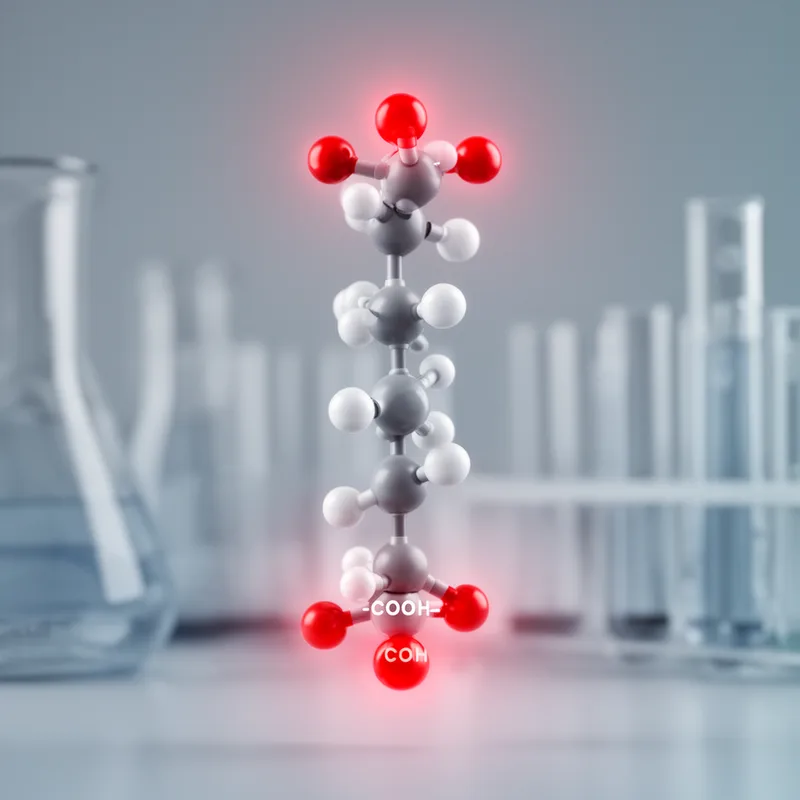
A molecule that has two acid groups called carboxyl groups
- adjective
- /ˌdaɪkɑrˈbɑksɪlɪk/
- Specialized
:
dicarboxílico
- The chemist explained that a dicarboxylic molecule contains two carboxyl groups attached to the carbon chain.
- dicarboxylic acid
Examples
-
So this is a diamine dicarboxylic acid, right?
-
Researchers studied the properties of a common dicarboxylic acid used in the production of plastics.
-
In biochemistry, dicarboxylic compounds play a crucial role in metabolic processes.
Compounds
Surface Forms
dicarboxylic positive
Morphology
dicarboxylic = carboxylic (transparent) = di + carboxyl + ic
Formed by prefixing 'di-' (two) to 'carboxylic'; the meaning 'having two carboxyl groups' follows standard chemical naming.
Etymology
The word dicarboxylic starts with di- meaning 'two' and includes carboxyl meaning 'an acid part that contains carbon and oxygen'. So a dicarboxylic molecule simply has 'two' carboxyl groups, which is why it means a molecule with two carboxyl groups.