
dibromide


 1
7.9
- noun
- /ˌdaɪˈbroʊmaɪd/
- Specialized
- Silicon dibromide is commonly used in semiconductor manufacturing due to its unique chemical properties.
- ethylene dibromide
Examples
-
At 900 K, the Br atoms on the surface can form silicon dibromide (SiBr2) units that can desorb, following a sequence of events described below.
Academic text (1998) -
When ethylene dibromide, a fumigant used to control fruit flies, was banned in 1984, the U.S. citrus export market became endangered.
Academic text (2003) -
These patterns reflect the energies of desorption of silicon dibromide at the different sites of the surface.
Academic text (1998) -
The chemical reaction involved the formation of dibromide compounds as intermediates.
-
Environmental studies often measure levels of dibromide to assess pollution from industrial sources.
Surface Forms
Morphology
dibromide = bromide (semi-transparent) = di + brom + ide
Formed by adding the numeral prefix 'di-' to 'bromide'; the composition is straightforward in chemical nomenclature but may be unfamiliar to general learners.
Etymology
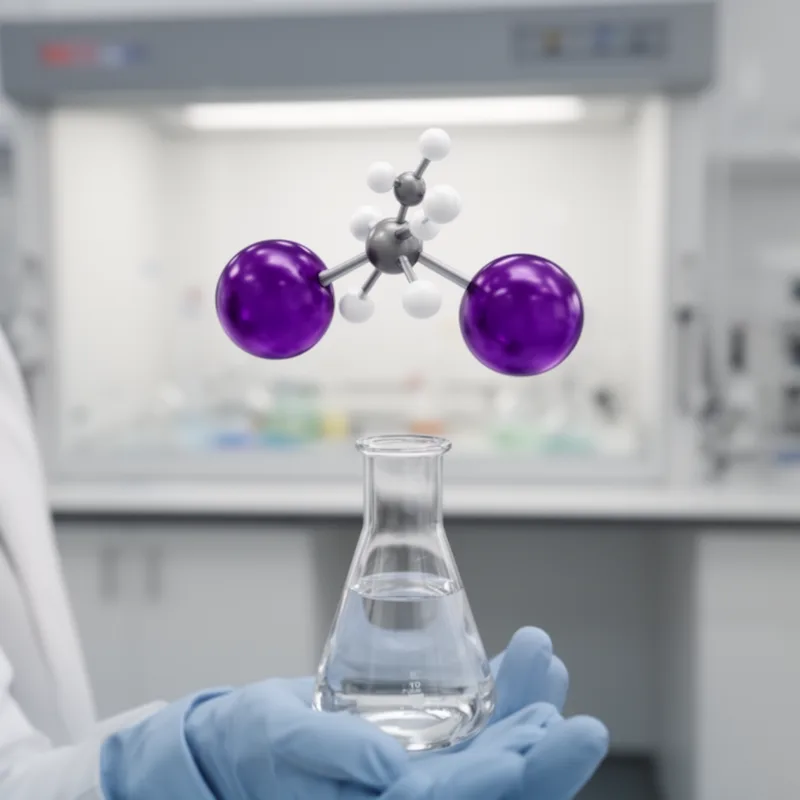
Dibromide breaks into the parts di- 'two' and bromide 'a compound with the element bromine', so a dibromide is a compound with two bromine atoms joined to another element or group.