
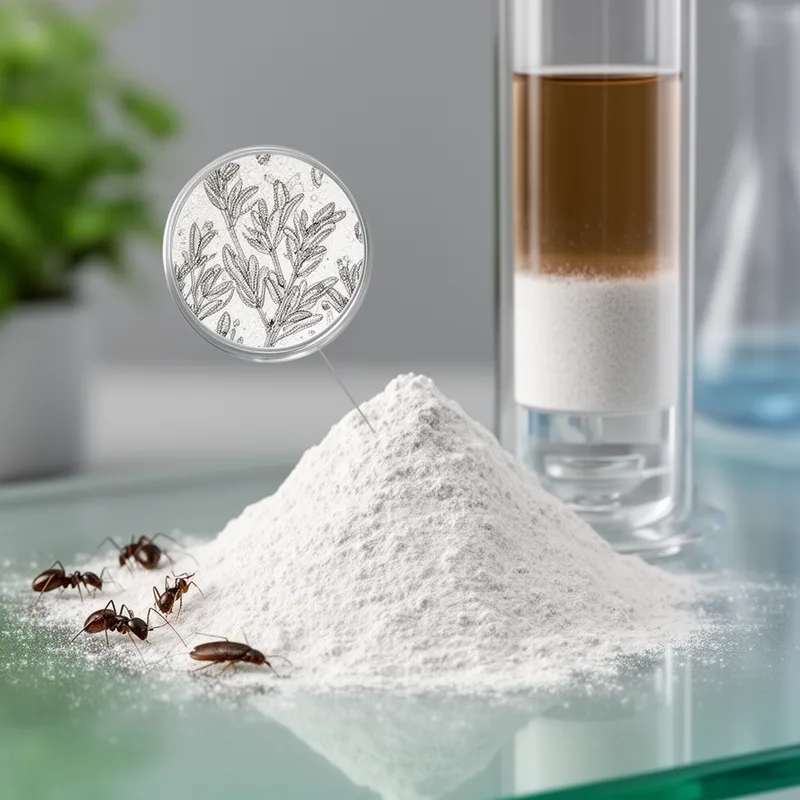
diatomaceous earth


 1
8.1
1
8.1
- noun
- /ˌdaɪəˈtoʊməʃəs ɜrθ/
- Specialized
- Diatomaceous earth is often used in gardens as an effective natural insecticide.
- diatomaceous earth vacuum
Examples
-
Diatomaceous earth, used as a filtration cake by Miller Brewing Co., was also added to the mixes.
Academic text (1996) -
I also add in a little bit of oyster shell and some diatomaceous earth, so I feel like it's a really good blend.
-
I will definitely get the diatomaceous earth and start using that.
Blog text (7) -
We tried the diatomaceous earth with no relief.
Blog text (7) -
Diatomaceous earth is the best!
Blog text (7) -
Food-grade diatomaceous earth has kept my house ant-free for years.
Blog text (7) -
Don't use diatomaceous earth as a as an insecticide against ants.
-
This company's diatomaceous earth vacuum filters provide extended corrosion-free operation for water treatment plants and industrial processes.
Academic text (1998) -
You can filter your water using diatomaceous earth to improve its clarity and taste.
-
Many pool owners use diatomaceous earth as a filtering agent to keep the water clean.
Synonyms

A light, soft rock made from tiny algae shells used to filter water and soak up liquids

A soft light powder from tiny fossil shells used to filter or soak up liquids
Surface Forms
Morphology
The compound is compositionally built: 'diatomaceous' denotes 'made of diatoms' and 'earth' denotes 'soil', so a learner who knows both constituents can infer it is a type of soil/ground material composed of diatoms (i.e., fossilized diatom remains). Although the term is technical, its meaning follows regular morphological composition and is therefore directly predictable from the parts.
Etymology
Diatomaceous earth comes from tiny water plants called diatoms and the word earth meaning 'soil'. Over time the plants left many tiny hard shells that became a soft, dusty powder, so the name really means 'soil made of diatoms', and that fine powder is why people use it for filtering and as a natural way to kill insects.