
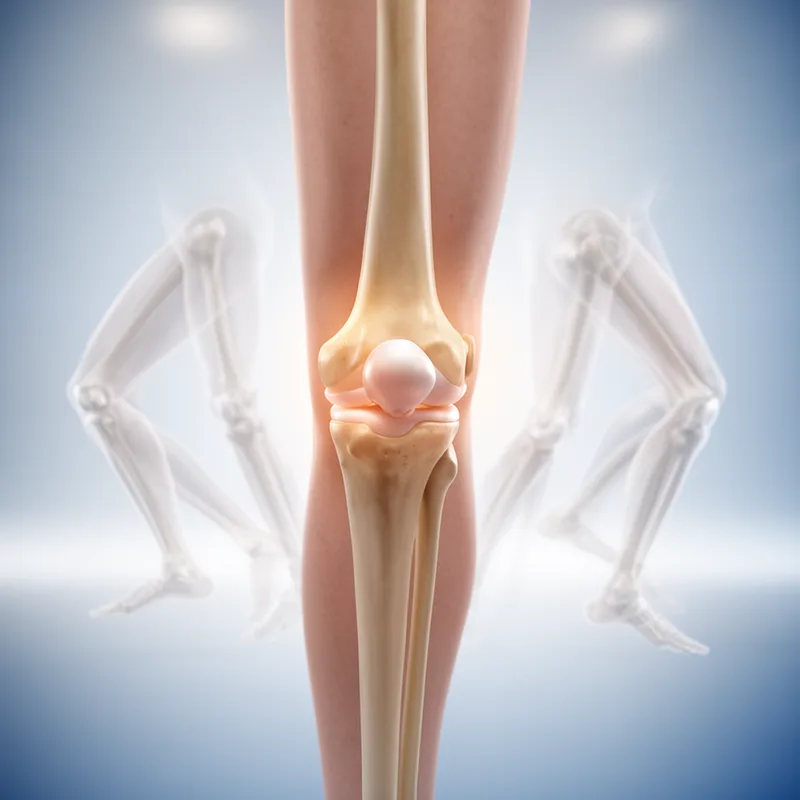
diarthrodial
- adjective
- /ˌdaɪərˈθrɒdɪəl/
- Specialized
 :
diartrodial
:
diartrodial
- Knee osteoarthritis (OA) is a highly prevalent joint disease, causing pain and disability in older people, and it can be characterized by progressive degradation of the diarthrodial joint tissues.
Examples
-
The diarthrodial joints in the human body allow for a wide range of motion, such as bending and lifting.
-
Although soft tissues within the diarthrodial joint have been successfully used to detect and monitor knee OA, changes associated with the subchondral bones are a promising imaging biomarker for assessing knee OA conditions 2-5.
Academic text (2017) -
In a healthy person, the diarthrodial joints, like the elbow and knee, function smoothly to enable various movements.
-
During physical therapy, the focus is often on strengthening the muscles around the diarthrodial joints to improve mobility.
Synonyms
 1
9.1
1
9.1

Relating to the thin fluid and lining inside a joint that help bones move smoothly
How Movable

Surface Forms
Morphology
diarthrodial = diarthrosis (opaque) = di + arthro + ial
The adjective is formed from the specialized medical noun 'diarthrosis', and the Greek combining forms are not transparent to general learners.
Etymology
The word diarthrodial breaks into parts: dia- meaning 'through' and arthro- meaning 'joint'. So a diarthrodial joint is one where the bones move freely at the joint, like your knee or elbow.