
diapir


 1
9.9
- noun
- /ˈdaɪəˌpɪr/
- Specialized
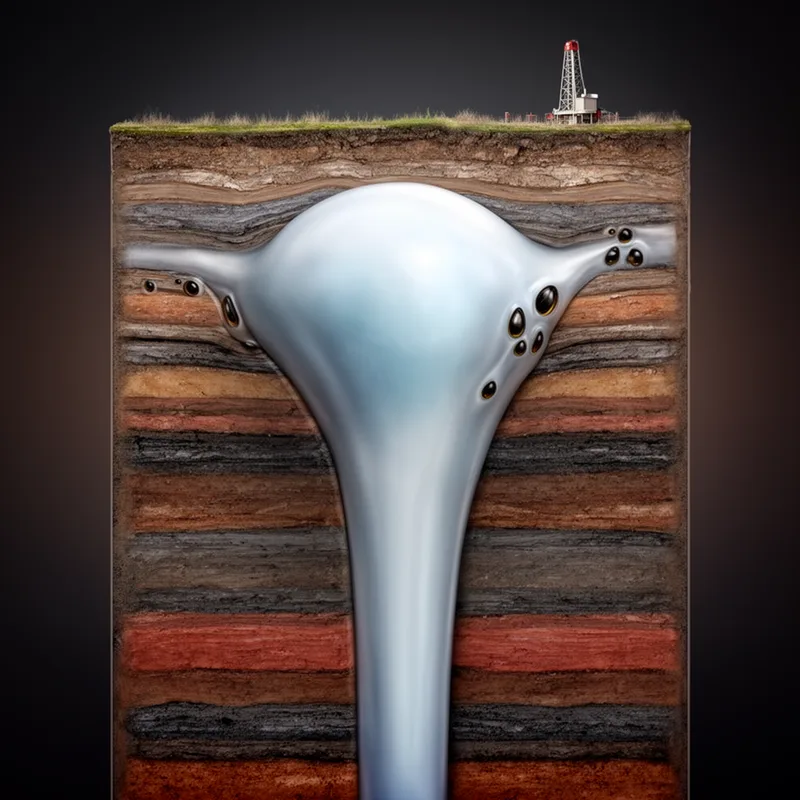
- The geologist explained that a diapir forms when hot rock pushes upward through the cooler, brittle layers above it.
Examples
-
Coronae are probably the result of huge blobs of hot rock, known to geologists as diapirs, pushing up on the surface.
Academic text (1995) -
Eventually, after a few million years, the diapir cools down, losing its ability to hold up the lithosphere.
Academic text (1995) -
Consequently, the diapir flattens out into a pancake.
Academic text (1995) -
As the diapir continues to push up on the lithosphere, the lithosphere pushes down on the diapir.
Academic text (1995) -
As the diapir continues to push up on the lithosphere, the lithosphere pushes down on the diapir.
Academic text (1995) -
Geologists have found diapirs on the Earth, so why don't we see coronae here?
Academic text (1995) -
When the diapir reaches the top of the mantle, it bumps up against the lithosphere, the solid shell of rock that forms the surface of the planet.
Academic text (1995) -
In some regions, a diapir can create a dome-like structure that affects the landscape significantly.
-
Understanding how a diapir interacts with surrounding rock layers is crucial for geological studies.
Surface Forms
Morphology
diapir = dia + pir
A technical geological borrowing built from Greek combining elements ('dia-' + 'pir'); the second element is not a standalone English word, so the meaning is not derivable by an average learner.
Etymology
Diapir comes from the Greek part dia- meaning 'through' and a part that means 'to pierce', so think of the English word 'pierce' to help you remember it. A diapir is rock that 'pierces through' the layers above it, forming a dome.