
diadromous


 1
9.9
- adjective
- /ˌdaɪəˈdrɒməs/
- Specialized
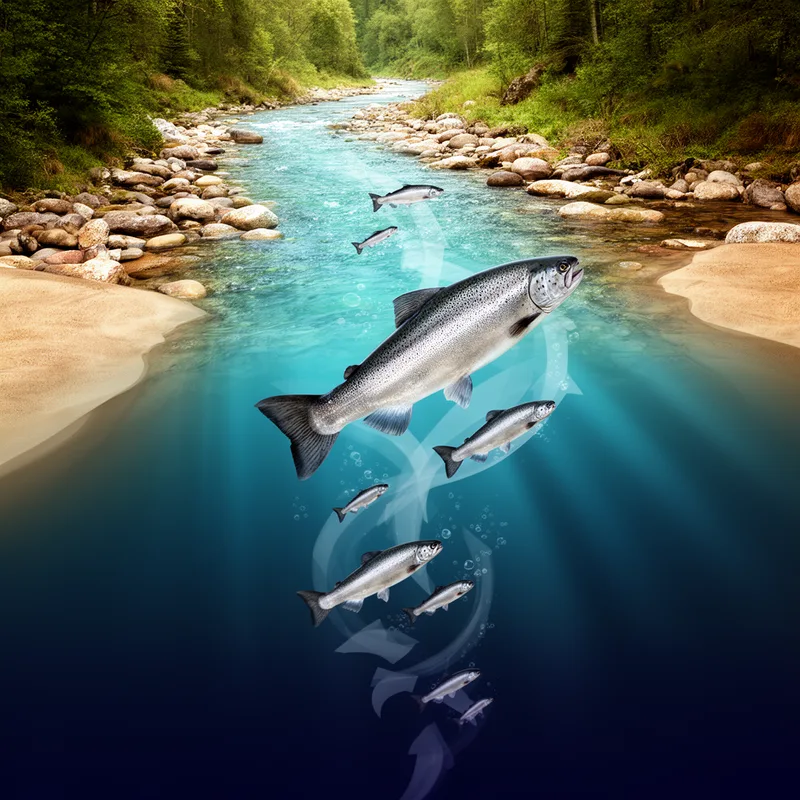
- During their life cycle, many diadromous fish travel from freshwater rivers to the ocean and back again.
- diadromous fish
- diadromous species
Examples
-
The native diadromous fish species were sampled with varying abundances and distributions among 118 sample sites (Table 1, Figure 2).
Academic text (2013) -
As water levels recede to ancient points and diadromous fish begin to migrate between saltwater and freshwater once again, a past riverscape is revealed.
Academic text (2018) -
Water pollution also has reduced runs of diadromous fish.
Academic text (2009) -
We identified 24 diadromous fishes in the North Atlantic.
Academic text (2009) -
Finally, diadromous species have played important roles for both indigenous and nonindigenous peoples.
Academic text (2009) -
For those diadromous fishes for which data exist, we show that populations have declined dramatically from original baselines.
Academic text (2009) -
Because the spawning aggregations of diadromous fishes often place them within easy reach of humans, these runs have been particularly important sources of protein.
Academic text (2009) -
Dams also have numerous other ecological effects on rivers, many of which may affect diadromous fishes directly or indirectly.
Academic text (2009) -
Comparisons of landings between diadromous fish taxon pairs from both sides of the Atlantic often show similar patterns (Figure 1).
Academic text (2009) -
On average, marine species made up the majority (86.7%) of organisms covered in the awareness campaigns, followed by diadromous species (7.6%) and freshwater species (5.7%).
Academic text (2011)
Surface Forms
Morphology
diadromous = dromous (opaque) = dia + drom + ous
The term is formed from technical Greek combining forms ('dia-' + 'drom-') and yields a specialized biological meaning that is not obvious to average learners.
Etymology
Diadromous comes from Greek parts dia- 'between' and dromos 'running' or 'course'. So a diadromous fish 'runs' or moves between fresh and salt water during its life, which is why the word means migrating between rivers and the sea.