
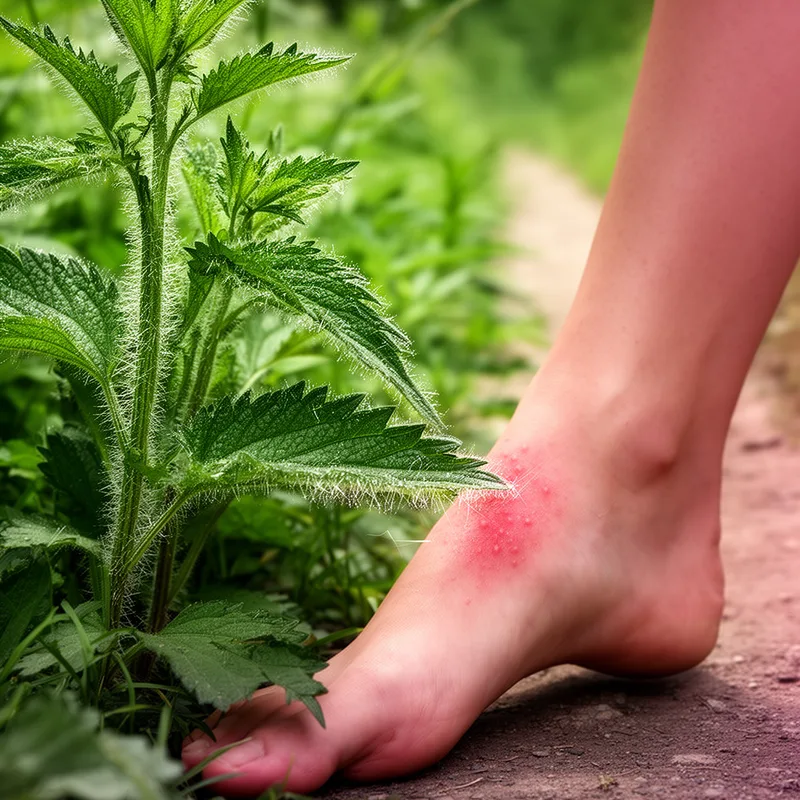
devil nettle
- noun
- US
- The leaves of devil nettle are covered with tiny hairs that irritate the skin.
Examples
-
Be careful when walking barefoot, as devil nettle can cause a painful sting.
-
Local farmers warn that devil nettle grows rapidly during the rainy season.
-
Watch out for the devil nettle in the garden!
-
The devil nettle is known for its painful sting.
-
Be careful when walking barefoot, as devil nettle can cause a painful sting.
-
The leaves of devil nettle are covered with tiny hairs that irritate the skin.
-
Local farmers warn that devil nettle grows rapidly during the rainy season.
Synonyms

A plant from tropical America with tiny hairs that sting your skin
A tropical herb with stinging hairs that irritate the skin

A tropical American plant with hairs that sting and cause a painful rash

A tropical plant with stinging hairs that make the skin hurt

A stinging plant from tropical America that makes your skin itch when touched
A tropical plant whose sap causes skin irritation when touched
Antonyms



Surface Forms
Morphology
devil + nettle
The compound is compositionally built: 'nettle' names a stinging plant and 'devil' functions as an associative/intensifying modifier suggesting danger or severity. An average B1 learner who knows both words will infer this is a type or particularly nasty nettle; the modifier+noun pattern is a regular, cross-linguistically common naming strategy, making the meaning directly derivable.
Etymology
The noun devil nettle comes from a simple image: people noticed the plant's tiny hairs give a sharp, painful sting, so they used devil for the pain and nettle for a stinging plant. That's why the name means 'a stinging herb' today.