
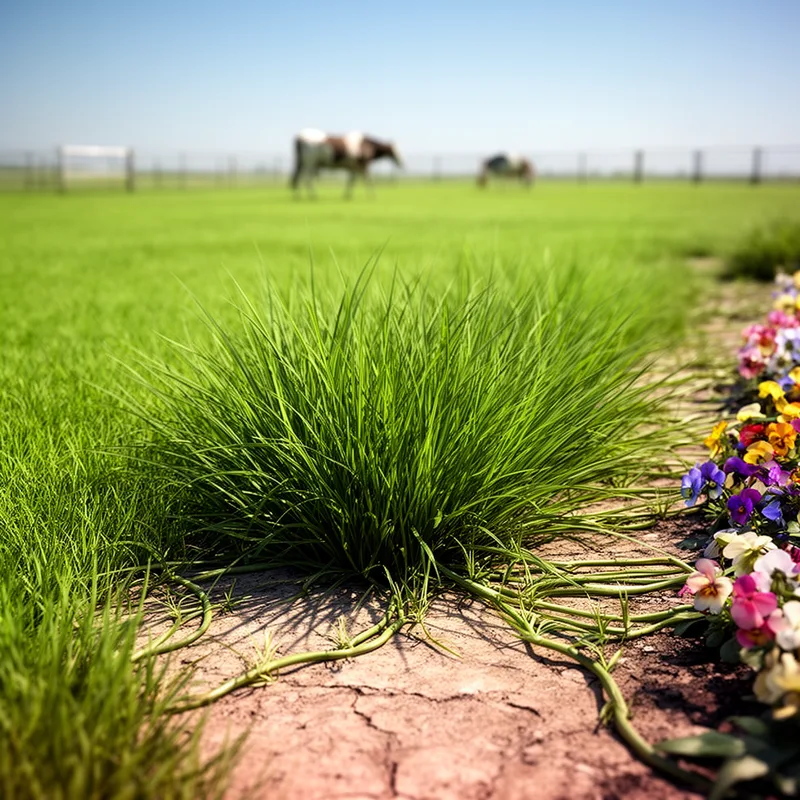
devil grass
- noun
- UK
- Many golf courses in southern states use devil grass for its durability and rapid growth.
Examples
-
The gardener warned that devil grass can quickly take over flower beds if not controlled.
-
Despite its name, devil grass is often valued for its ability to withstand drought.
-
The devil grass spread quickly across the lawn.
-
Many homeowners love devil grass for its durability.
-
Many homeowners choose devil grass for their lawns because it requires little maintenance.
-
In pastures, devil grass provides a durable ground cover that helps prevent soil erosion.
-
Some plants, like devil grass or Kuni grass, have pale-colored underground stems.
Synonyms

 1
9.9
1
9.9

A soft grass that grows close to the ground and people use for lawns and pasture in warm places
 1
3.8
1
3.8
A grass that grows along the ground and is used for lawns and fields for animals

A grass used for lawns and animal feed in warm places

A spreading grass often used for lawns and for animals to eat

A tough grass that people use for lawns and pastures in warm places

A grass that spreads quickly and forms a thick cover for lawns or pastures
Surface Forms
Morphology
devil + grass
The noun is compositionally a type of grass, so a B1 learner who knows 'devil' and 'grass' would correctly infer it names some kind of grass. However, the precise botanical sense and why it is labelled 'devil' (trailing habit, uses for lawns/pastures, or negative/colourful naming) are not predictable from the constituents, making the meaning only partially transparent.
Etymology
Devil grass may come from how this grass spreads: gardeners saw it take over beds and be 'hard to kill', so they called it a devil that would not go away. That's why the name is used for fast-growing, tough lawn and pasture grass.