
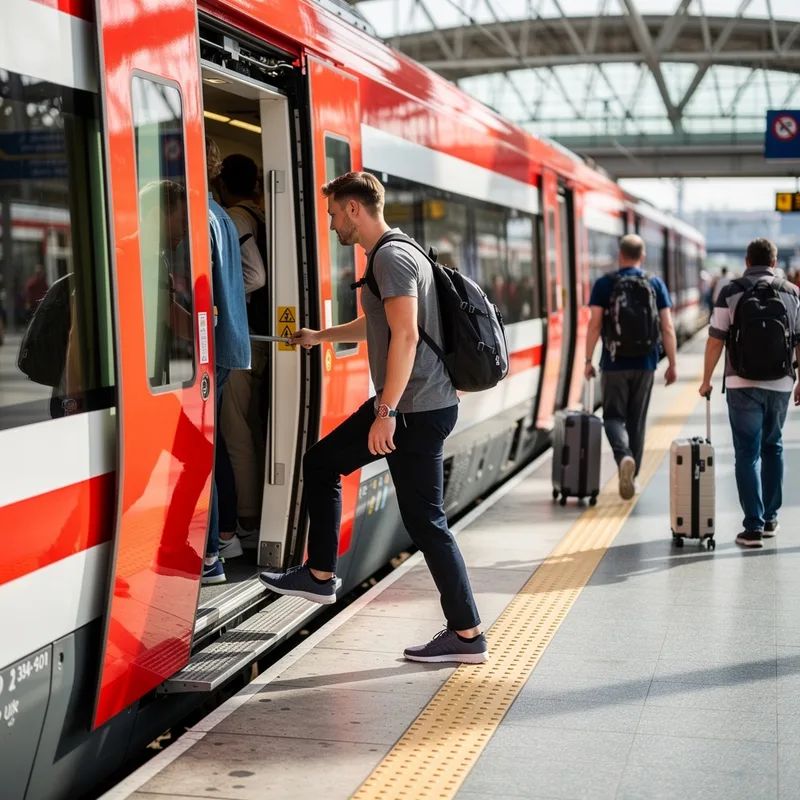
to detrain
 1
6.7
1
6.7

- verb
- /dɪˈtreɪn/
- The passengers will detrain at the next station, so please have your tickets ready.
Examples
-
What would the reaction be if, in a major metropolitan area, a local commuter train nearly ran over passengers detraining at a station it was not supposed to be passing through?
Blog text (29) -
And, more importantly, in many cases there were multiple departure times so that one was not forced to board or detrain in the middle of the night, as for instance when going to or from Cleveland today.
Blog text (7) -
When they detrained, they found only three buildings to shelter them, all recently erected by the Leach Brothers.
Academic text (2006) -
As the train slowed down, everyone prepared to detrain quickly before the doors closed.
-
After the long journey, the soldiers finally detrained and were greeted by their families.
Synonyms
 32
1.9
32
1.9
Leave a vehicle like a bus or train at a stop
 21
5.1
21
5.1
To leave a ship, plane, or other vehicle after a journey
 21
4.5
21
4.5
To get off a horse, bicycle, or vehicle
Antonyms

Surface Forms
Morphology
Etymology
Detrain is made from the prefix de- meaning 'off' or 'away' and the word train. So, detrain simply means to get 'off' a train or to leave it.