
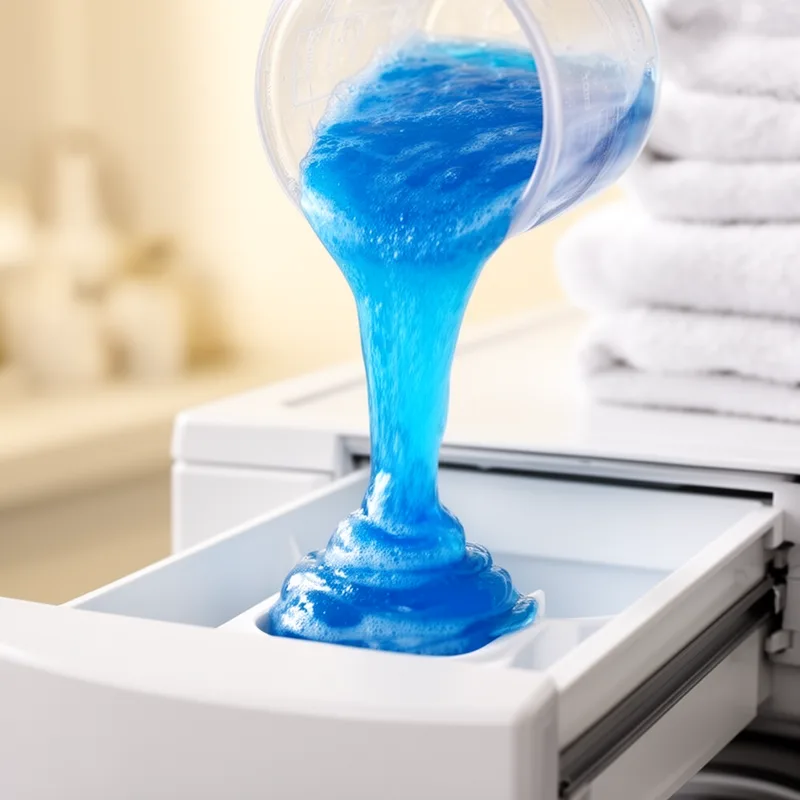
detergent
 70
2.7
70
2.7

- noun
- /dɪˈtɜrdʒənt/
- Make sure to add the detergent before starting the washing machine.
- laundry detergent
- liquid detergent
- dishwashing detergent
Loading YouTube…
Watch on YouTubeWell, one speck of phosphate from any detergent is going to wreck this experiment.
- Well, one speck of phosphate from any detergent is going to wreck this experiment.
- It suggests the detergent compartment is being overfilled.
- Well, it's June, get out the the dry cloth and the mild detergent, it's time to clean the antenna.
- There were a lot of questions about cosmetics and laundry detergents.
- This almost smells to me like a apple laundry detergent.
- And then I washed them with detergent, you know, to like this Suavetel, it's called in Mexico.
- You know, recommend eco friendly detergents and dryer sheets that are packaged in biodegradable packaging.
- OK, we're you we are using you can use detergent degreaser, you can use water, you can use solvents.
- Her summation of it was, we don't know what caused it, but it could have been a soap, a detergent, a body wash.
- You know, a dog bites you, you know a bad detergent get sold to you.
- Because we have a huge excessive detergent and we're looking for one small drug molecule.
Examples
-
Artie turned on the hot water and squirted detergent into the sink.
Fiction book (1999) -
Tell them to bring dish detergent and silver polish to the office.
Fiction book (2001) -
And then using some detergent, we wash out all the cells.
-
Use that and get yourself some detergent on the cheap.
-
Why do you guys have detergent?
-
I packed you some detergent.
-
I was wondering whether you had a few minutes to talk about, uh, laundry detergent.
-
Detergent is under the sink.
-
The air is moist, thick with the smell of detergent and dog.
Fiction book (1996) -
Angie's washing machine had the annoying habit of always leaving some detergent in the laundry.
Fiction book (2002)
Synonyms
 108
1.0
108
1.0
A liquid or powder used to clean surfaces
 20
3.0
20
3.0
A product used to clean things, especially the skin, for example to wash the face
 16
1.0
16
1.0
A liquid or powder that cleans clothes in a washing machine
 3
1.8
3
1.8
A liquid soap that cleans dishes by hand
 1
1.9
1
1.9
A liquid cleaning product for washing clothes, dishes, or surfaces


 1
1.6
1
1.6
A powder you add to water to clean clothes

A man-made cleaning agent with tiny parts that have a negative charge in water
A cleaning chemical whose molecules do not carry an electric charge in water and that makes little foam
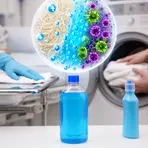
A manmade cleaner with positively charged particles used to kill germs or soften clothes

A liquid or powder that you use to clean skin, objects, and surfaces
Compounds
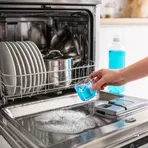 1
2.0
1
2.0
A cleaning product made for use in dishwashers that makes little foam when washing plates and pots
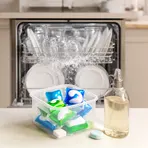
- Specialized
A manmade cleaner with positively charged particles used to kill germs or soften clothes
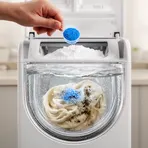
- Specialized
A chemical added to soap or detergent to make hard water softer and help remove dirt
- Specialized
A man-made cleaning agent with tiny parts that have a negative charge in water
- Specialized
A cleaning chemical whose molecules do not carry an electric charge in water and that makes little foam
How Clean

Surface Forms
Morphology
detergent = deterg + ent
The segment '-ent' is a Latin-derived nominal/adjectival ending but the root 'deterg' is not a standalone modern English word, so learners cannot reliably derive the meaning from its parts.
Etymology
Detergent comes from Latin parts de- meaning 'off' and tergere meaning 'to wipe away', so a helpful image is something that 'wipes off' dirt. So a detergent is a cleaning substance that removes dirt and grease, which is why we use it for washing clothes and cleaning surfaces.