
dephasing
- noun
- /dɪˈfeɪzɪŋ/
- Specialized
- The exciters with energies below this edge are localized and have a rather slow dephasing rate, whereas those with energies above the edge are delocalized and have a fast dephasing rate.
Examples
-
Together, Landau and Teller presented a quantum mechanical description of sound dispersion and attenuation that was based on the dephasing of sound modes due to their coupling to internal degrees of freedom of molecules in the medium.
Academic text (2004) -
The oscillation amplitude likely decays with increasing laser power because of the excitation of additional electrons nearby that create additional dephasing.
Academic text (2002) -
Spin echo works by inverting the electron's spin configuration and allowing the equal but now opposite effect of B nuc to cancel the initial dephasing.
Academic text (2006) -
The dephasing and rephasing both occur when the (1, 1) charge state is strongly favored—that is, when e = 0.
Academic text (2006) -
When the dephasing and rephasing times are the same and tE is appropriately tuned, Ps decays with a best-fitting timescale of 1.2 s.
Academic text (2006) -
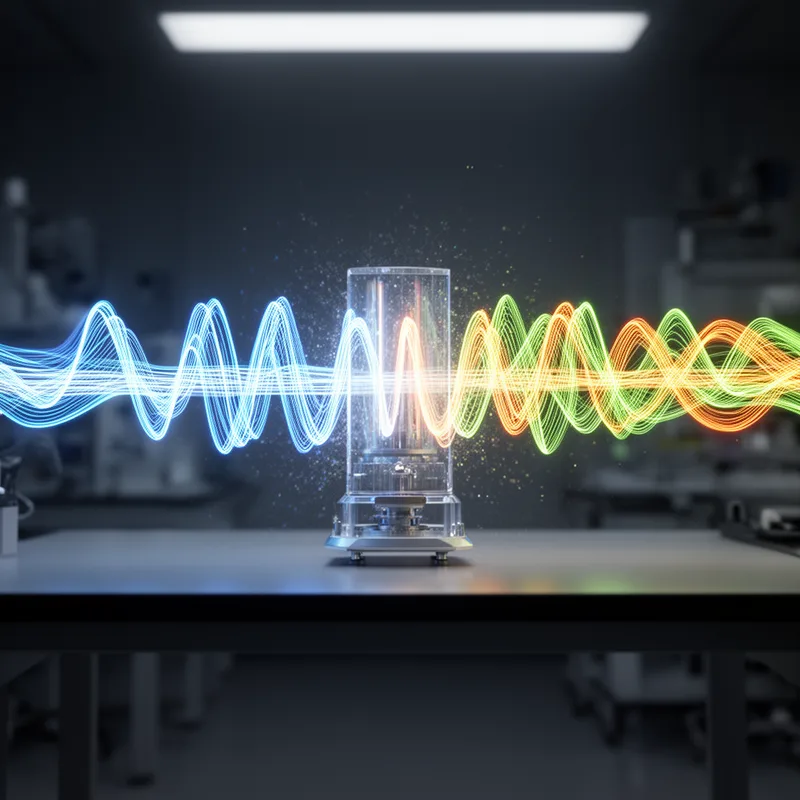
In quantum mechanics, dephasing occurs when the quantum states lose their coherence, making it difficult to predict their behavior.
-
The researchers studied dephasing in the system, finding that it caused the waves to become less correlated over time.
-
To improve the accuracy of their experiments, they took measures to reduce dephasing effects in their observations.
Synonyms

 3
9.9
3
9.9

When a small system of tiny particles stops showing quantum effects because of its surroundings
Antonyms

How Coherent

Surface Forms
Morphology
Etymology
Dephasing comes from the prefix de- meaning 'away' or 'remove' and the common word phase meaning a 'stage' or 'part' (as in a phase of the moon). A helpful way to remember it is to think of waves or particles moving 'out of step' with each other. So dephasing is the process where phases stop being 'in sync', which explains the loss of coherence in a system.