
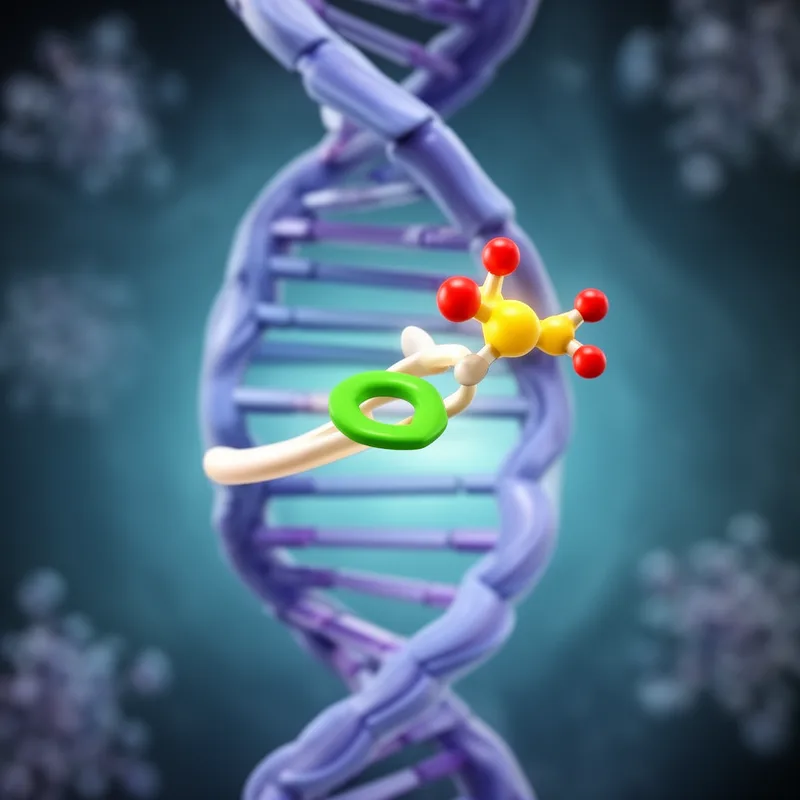
deoxycytidine monophosphate
- noun
- /diːˌɒksɪˈsaɪtɪdiːn ˌmɒnəˈfosfeɪt/
- Specialized
- A mutation can affect the synthesis of deoxycytidine monophosphate, potentially impacting DNA replication.
Examples
-
Researchers measured the levels of deoxycytidine monophosphate in different tissue samples.
-
The enzyme catalyzes the conversion of deoxycytidine monophosphate to deoxycytidine diphosphate.
-
The deoxycytidine monophosphate structure is crucial for DNA synthesis.
-
Researchers studied the deoxycytidine monophosphate properties.
-
Scientists investigate how deoxycytidine monophosphate contributes to the stability of DNA.
-
In the lab, they observed the role of deoxycytidine monophosphate in nucleotide synthesis.
-
The concentration of deoxycytidine monophosphate is essential for understanding genetic mutations.
Surface Forms
Morphology
deoxycytidine + monophosphate
The term is a straightforward chemical compound name formed by combining 'deoxycytidine' (a nucleoside) with 'monophosphate' (a single phosphate group). Given knowledge of both constituents, the meaning — a deoxycytidine molecule bound to one phosphate — is directly derivable following standard biochemical naming conventions, so it is compositional and predictable.
Etymology
Deoxycytidine monophosphate is named from its parts: deoxy ('without an oxygen'), cytidine (the sugar-and-base part), and monophosphate ('one phosphate' group). So it is a small 'building block' of 'DNA' that has a single phosphate.

