

deodara
- noun
- /ˈdiːəˌdɑːrə/
- Indian
- The deodara tree is known for its fragrant wood, which is often used in furniture making.
- deodara cedar
- Cedrus deodara
- deodara cedar
Examples
-
It is possible to combine deodar cedar (Cedrus deodara) with other plants in order to take advantage of environmental noise control properties.
Academic text (2010) -
The deodar cedar (Cedrus deodara) and Red Robin Photinia (Photinia fraseri) were planted in individual tubs.
Academic text (2010) -
Deodar cedar (Cedrus deodara), for example, reduces low-frequency noise more effectively than the other five plants studied, even though its dL Aep is negative.
Academic text (2010) -
Red Robin Photinia (Photinia fraseri) and deodar cedar (Cedrus deodara) were put into individual tubs and placed in abreast and crossing arrangements.
Academic text (2010) -
In gardens, the deodara is valued not only for its timber but also for its striking appearance.
-
The heritage site features several mature deodara trees that enhance the landscape with their beauty.
Synonyms

A tall Himalayan cedar with drooping branches that people grow for its wood and beauty

A tall cedar tree from the Himalayas with spreading drooping branches and strong wood used for building
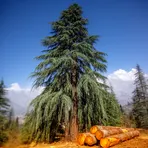
A tall evergreen tree from the Himalayas with long, hanging branches and strong wood

A tall evergreen tree from the western Himalayas with spreading, hanging branches valued for its wood and beauty
Compounds
- Specialized
A tall Himalayan cedar with drooping branches that people grow for its wood and beauty
How Tall


Surface Forms
Etymology
The word deodara comes from the Sanskrit name devadāru, meaning 'wood of the gods', from deva 'god' and dāru 'tree'. So, this fragrant Himalayan cedar was long treated as sacred and gives strong, pleasant-smelling wood, which explains its modern name.