
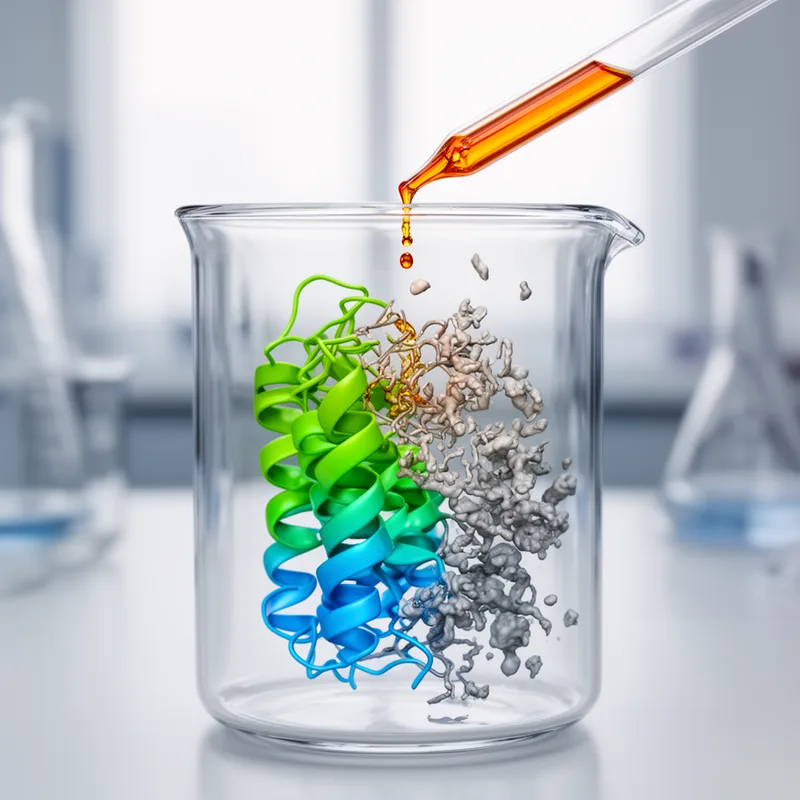
denaturant


 1
9.9
- noun
- /dɪˈneɪtʃərənt/
- Specialized
- Some denaturants are used in industry to make certain substances unsuitable for human consumption.
- denaturant of proteins
Examples
-
The food manufacturer added a denaturant to the alcohol to prevent it from being consumed.
-
The U.S. ethanol industry has consistently inflated its ethanol yields by counting 5 volume percent of #14 gasoline denaturant (8% of energy content) as ethanol.
Blog text (29) -
Dialysis is a way to dialyze away the denaturant and then what happens if we allow this to oxidize?
-
These controls showed that the acetone-fixed cultures of infected cells tolerated the protein denaturant without substantial loss of cells or irreversible damage to viral antigenicity.
Academic text (1991) -
Scientists generally consider high pressure a denaturant of proteins in mesophiles, microbes that live in a middle-of-the-road manner, tolerating temperatures below 70 degrees Celsius and a pressure of 1 atm.
Academic text (1994) -
In laboratories, a denaturant alters the structure of proteins for various experiments.
Surface Forms
Morphology
Etymology
Denaturant comes from the parts de- 'remove' and nature 'natural state', so it literally means something that takes away a thing's nature. That's why a denaturant is a substance that changes a protein's natural shape and makes it stop working as it should.