

demethylation
- noun
- /ˌdiːˌmɛθɪˈleɪʃən/
- Specialized
- During these processes, DNA remethylation and demethylation are prone to being disturbed, and these changes can be inherited by offspring (Bergman and Cedar 2013; Seisenberger et al. 2013; Vrachnis et al. 2012).
- DNA demethylation
- demethylation of genes
Examples
-
Most commonly, methylation inhibits gene expression, while demethylation activates it, allowing genes to be expressed.
-
In many plants, demethylation is essential for regulating growth and response to environmental changes.
-
Discovery of the first chemical inhibitor of histone demethylation
Blog text (6) -
Most commonly, methylation inhibits gene expression, whereas demethylation leads to gene activation.
Academic text (1993) -
The number of exosomes and the concentration of total proteins in exosomes were significantly increased after treatment with 5-aza-CdR. This increase might be mediated by p53 gene up-regulation and 5-aza-CdR demethylation.
Academic text (2017) -
Tissue-specific genes are nearly fully methylated in the germ cells, whereas the demethylation of these genes usually takes place only in the specific tissue of expression (Cedar 1988, Yisraeli et al. 1986).
Academic text (1993) -
The researchers found that demethylation occurs in response to stress, activating certain genes.
Antonyms
- Specialized
 3
7.5
3
7.5

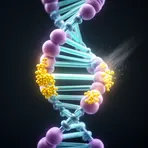
A small chemical group attaches to DNA or proteins and changes gene activity
Surface Forms
Morphology
demethylation = methylation (transparent) = de + methyl + ation
Given the technical base word 'methylation', adding 'de-' straightforwardly signals removal or reversal.
Etymology
Demethylation breaks into de- meaning 'remove' and methyl, the name for a tiny chemical 'tag' that cells put on molecules. So demethylation is the removal of that small chemical 'part', which explains why the word means taking away a methyl group from a molecule in chemistry and biology.