
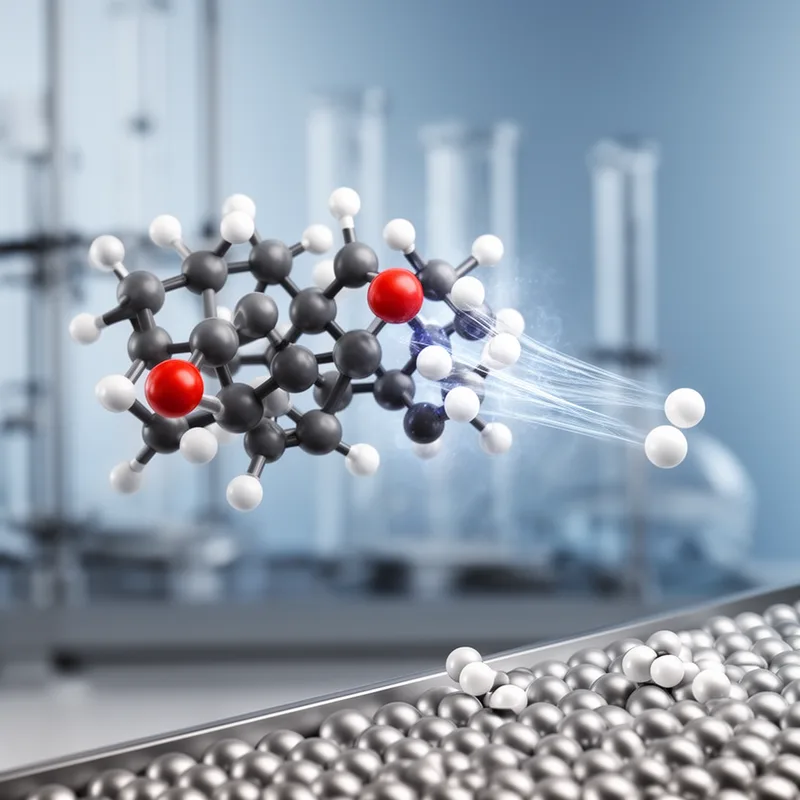
to dehydrogenate
- verb
- /diːhaɪˈdrɒdʒəneɪt/
- Specialized
- Some catalysts are used to dehydrogenate hydrocarbons during fuel processing.
Examples
-
The process will dehydrogenate the alcohol to form the corresponding aldehyde.
-
Scientists dehydrogenated the compound to study its reactivity.
-
The enzyme can dehydrogenate alcohols effectively.
-
They dehydrogenated the compound in the lab yesterday.
-
Scientists dehydrogenated the compound to study its reactivity in their experiments.
-
Some catalysts are used to dehydrogenate hydrocarbons during fuel processing, enhancing efficiency.
-
The process will dehydrogenate the alcohol to form the corresponding aldehyde in the chemical reaction.
Synonyms
To remove hydrogen from a molecule to create a double bond in chemistry
Antonyms
- Specialized
 6
8.1
6
8.1

To add hydrogen to a substance, often turning liquid oils into solids
How Hydrogenated
- Specialized
6
8.1

- Specialized
Surface Forms
Morphology
dehydrogenate = hydrogenate (transparent) = de + hydrogen + ate
In scientific English, 'de-' productively marks removal or reversal, so 'dehydrogenate' is directly understandable from 'hydrogenate'.
Etymology
Dehydrogenate starts with de- meaning 'remove' and contains hydrogen, which comes from Greek parts hydro- 'water' and -gen 'producer'. So, to dehydrogenate is to 'take away' hydrogen from a chemical compound, which is exactly what the word means in chemistry.