
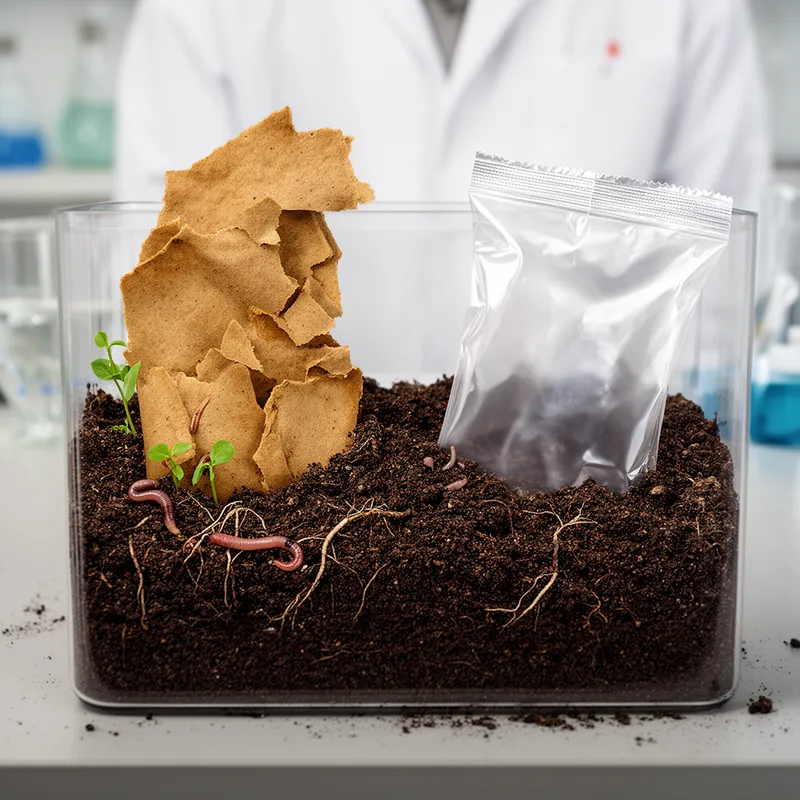
degradability
- noun
- /ˌdɛɡrəˈdeɪbɪlɪti/
- Specialized
- Another issue being raised in standards development is balancing the need for shelf life with the demand for rapid degradability.
Examples
-
Yet another experiment compared the degradability of previously contaminated soil and a sample newly contaminated with PCBs.
Academic text (1998) -
From a packaging perspective, if a company develops a material designed to be compostable, what you really want to talk about is compostability, not degradability.
Academic text (1995) -
Three types of bags provided an opportunity to evaluate degradability.
Academic text (1996) -
The first trial did not yield positive results for degradability, most likely because the organisms do not have to compete with bacteria in their natural state.
Academic text (1998) -
The polymer names are daunting, and data on degradability is overwhelming.
Academic text (1995) -
These companies met in New Hampshire in October 1995 to finalize organizational issues and begin to develop voluntary degradability tests, standards, and labeling for the industry.
Academic text (1995) -
In Japan, for example, the Degradable Plastics Society (DPS) proposed a standard for degradability that has been accepted in Japan and is being considered by the International Standards Organization (ISO).
Academic text (1995) -
After a somewhat shaky start in the late 1980s—due to questionable claims of degradability by some product manufacturers—the industry has become much more sophisticated, with a wide array of polymers and products in development or already commercially available.
Academic text (1995) -
Specifically, they included anaerobic and aerobic tests for biodegradability, hot/dry and hot/wet tests for thermo-oxidative and thermo-hydrolytic degradability, and outdoor weathering tests for photo-degradability.
Academic text (2000) -
Researchers are studying the degradability of various materials to find more environmentally friendly options.
Synonyms


 1
4.9
1
4.9
How quickly bacteria and other living things break something down in nature

How quickly food or other things go bad

How quickly food or other items go bad
A tendency of a chemical to change or break down quickly
Antonyms


How Degradable
- Specialized
1
4.9

- Specialized
Surface Forms
Morphology
degradability = degradable (transparent) = degrade + ability + ity
The suffix '-ity' forms a noun indicating the state or quality of being degradable.
Etymology
Degradability comes from the parts de- meaning 'down' and grade meaning 'step' or 'level', the same root you see in the word grade. So degradability is about how easily something can be taken 'down' a step or 'break down' over time, which is why we use it to talk about materials that naturally fall apart.