
defibrillatory


 1
7.5
- adjective
- /dɪˈfɪbrɪˌleɪtəri/
- Specialized
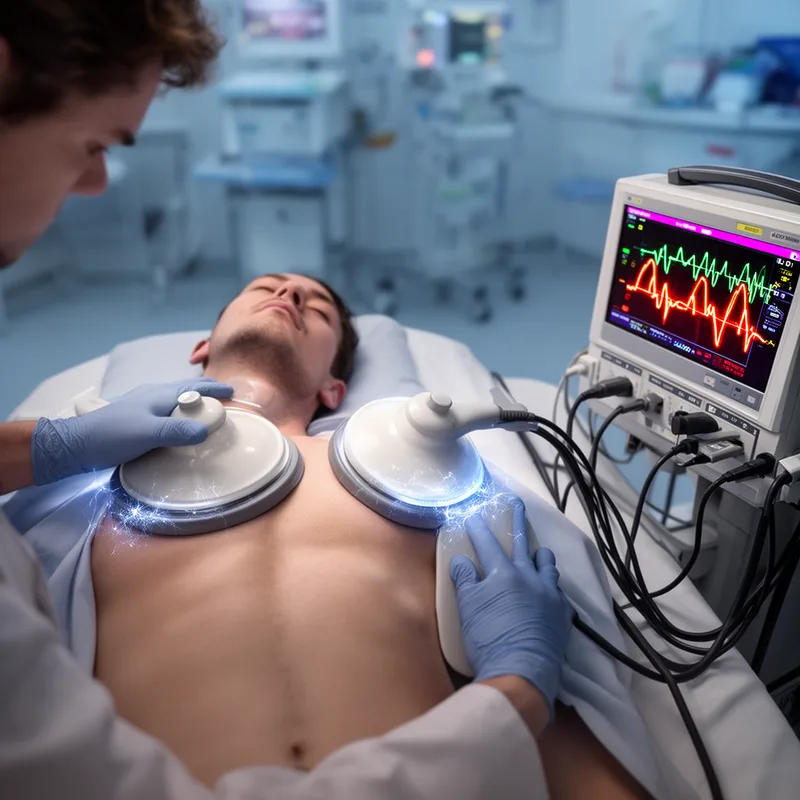
- A defibrillatory device is essential in emergency cardiac care units.
Examples
-
The doctor applied a defibrillatory shock to restart the patient's heart.
-
The nurse prepared the defibrillatory equipment before the procedure began.
-
The defibrillatory device saved his life.
-
Doctors used a defibrillatory shock to restore his heartbeat.
-
The paramedics delivered a defibrillatory shock to restore his heart's normal rhythm.
-
During the emergency, the doctor prepared the defibrillatory equipment to revive the patient.
-
After a cardiac arrest, defibrillatory intervention was crucial to stabilize his heartbeat.
Synonyms
 1
8.3
Helping to bring someone or something back to life
Surface Forms
Morphology
defibrillatory = defibrillate (transparent) = defibrillate + atory
Adjective formed by regular suffixation from the verb 'defibrillate', so the meaning 'relating to defibrillation' is directly derived.
Etymology
Defibrillatory comes from de- ('remove') plus fibrillate, which comes from fiber ('small fibers') and refers to a fast, wrong 'twitching' of the heart muscle. So a defibrillatory shock is used to stop that twitching and help the heart beat normally.