
decentration
- noun
- /ˌdiːsɛnˈtreɪʃən/
- Specialized
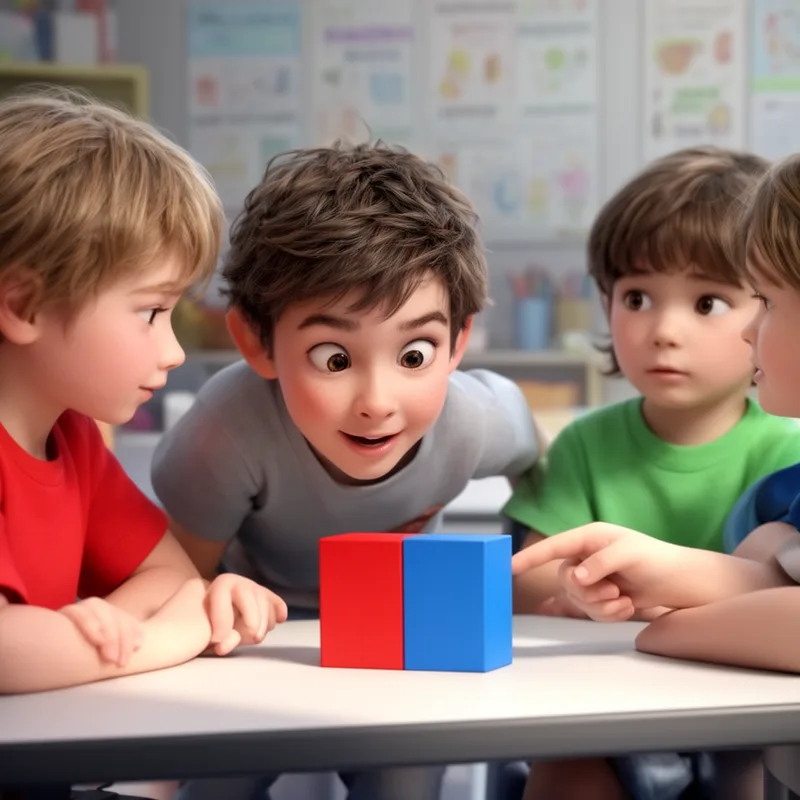
- In Piaget's theory, decentration refers to the cognitive shift where children start to understand perspectives different from their own.
Examples
-
As children grow, their ability to practice decentration allows them to consider the feelings and thoughts of others.
-
These are decontextualization (the ability to mentally transform objects or substitute one object for another using increasingly abstract forms), decentration (moving from actions on the self to actions on, then for, another), sequencing (the ability to combine behaviors in an increasingly ordered manner), and planning (the developing ability to organize materials and actions for the self and others).
Academic text (2003) -
Essentially, these children produced pretend play that was unplanned, but they were beginning to show signs of decentration.
Academic text (2003) -
The next analysis compared the stages of the four underlying processes, namely, decontextualization, decentration, sequencing, and planning across the three groups of children.
Academic text (2003) -
These codings included the overall stage plus the stages of the four structures of decontextualization, decentration, sequencing, and planning.
Academic text (2003) -
Agreement for Decentration was 98% (k = .92) for the combination of Stages 1 and 2 and 98% (k = .92) for Stages 3 and 4.
Academic text (2003) -
The concept of decentration helps explain why young children often struggle with sharing and taking turns.
Synonyms



 1
7.7
1
7.7
A child's move from seeing only their own view to seeing other people's views
Antonyms

How Other-Focused

Surface Forms
Morphology
decentration = centration (semi-transparent) = de + centr + ation
The formation from 'centration' by adding the productive prefix 'de-' meaning removal or reversal is morphologically regular and the direction of change is clear.
Etymology
Decentration comes from the parts de- meaning 'away from' and center meaning 'middle'. It literally means moving away from the 'center', so in psychology it describes leaving a self-centered view and beginning to see other people's points of view.