
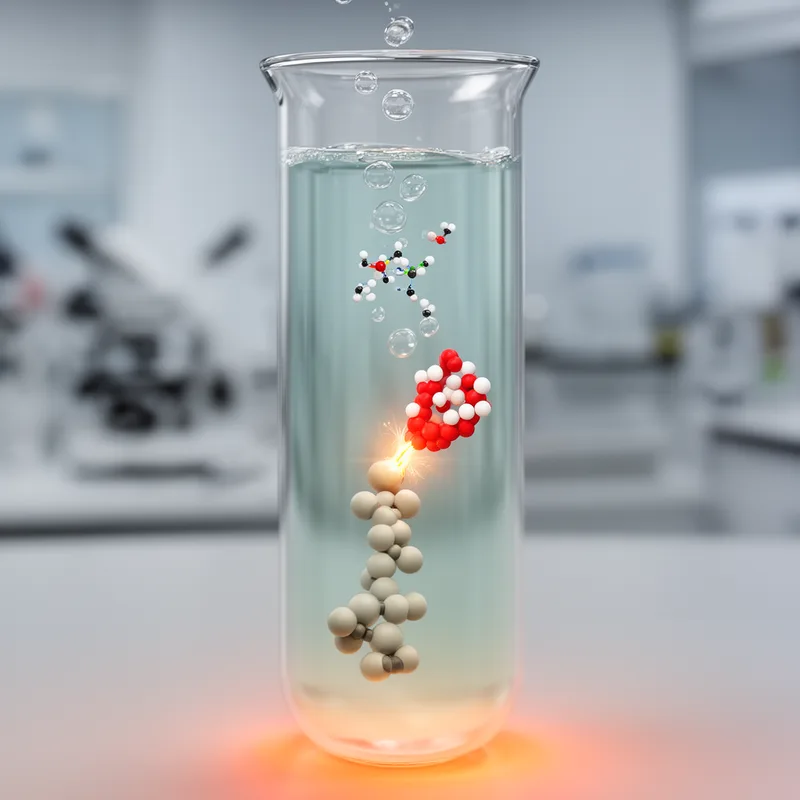
to decarboxylate
- verb
- /ˌdiːkɑːrˈbɒksɪleɪt/
- Specialized
- During the experiment, the team observed how the acid would decarboxylate when heated.
Examples
-
Well, the first thing is, is that we have to decarboxylate this molecule.
-
Now once the pyruvate decarboxylates, then it's going to be the carbonyl of acetyl COA.
-
In order to activate the compound for further reactions, we must decarboxylate it first.
-
The chemist explained that to synthesize the product correctly, we need to decarboxylate the original substance.
Surface Forms
Morphology
decarboxylate = carboxylate (transparent) = de + carboxyl + ate
In chemical terminology, adding 'de-' to 'carboxylate' straightforwardly gives the meaning 'remove a carboxyl group from'.
Etymology
The word decarboxylate breaks into de- ('remove') and carboxyl (a small 'acid' part that has carbon and oxygen). So, to decarboxylate a compound is to take off its 'carboxyl' part, often causing it to release 'carbon dioxide'.

