
decalescence
- noun
- /ˌdɛkəˈlɛsəns/
- Specialized
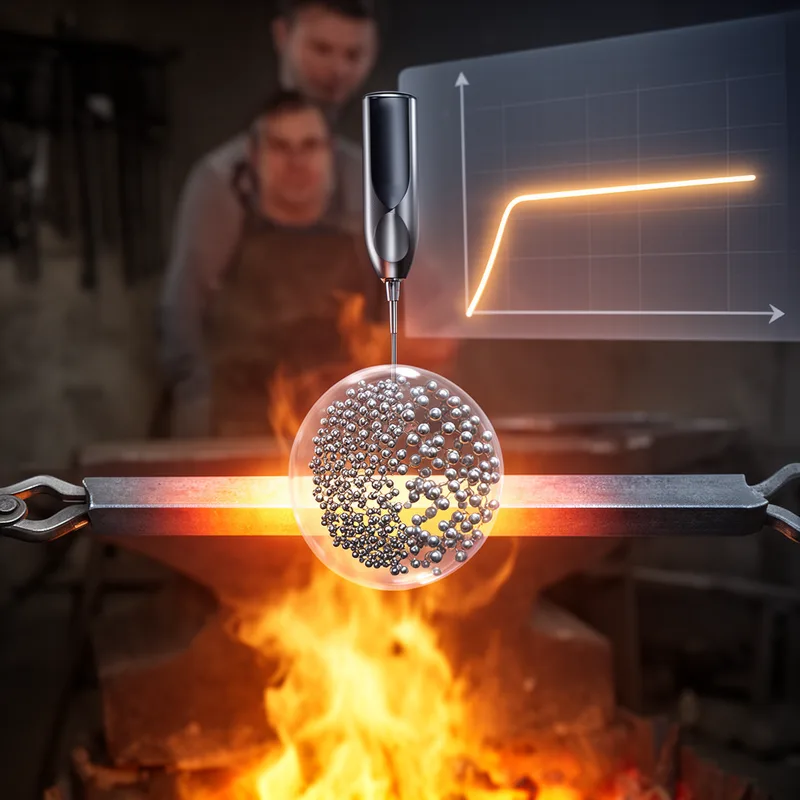
- During the heat treatment, the blacksmith observed decalescence as the metal's temperature stopped rising momentarily.
Examples
-
The phenomenon of decalescence is important for understanding phase changes in steel.
-
If not accounted for, decalescence can lead to inaccurate temperature readings during forging.
-
The process of decalescence is critical in metallurgy.
-
During decalescence, the metal's temperature rises more slowly.
-
During the heat treatment, the blacksmith noticed decalescence as the metal's temperature gradually stabilized due to internal structural changes.
-
If not taken into consideration, decalescence can cause misleading temperature measurements while working with metals.
-
Understanding decalescence is essential for metallurgists to accurately predict phase transformations in steel.
Surface Forms
Morphology
decalescence = calescence (opaque) = de + calescence
Although morphologically analyzable as de- + calescence, the base 'calescence' is rare and the metallurgical sense is highly technical and not inferable by an average learner.
Etymology
Decalescence comes from the parts de- meaning 'down' or 'away' and calescere meaning 'to grow warm', the same root behind calorie. So, in work with metal, decalescence is the moment when the metal's temperature stops rising for a moment because something inside the metal changes, which is why the name fits.

