

dead-air space
- noun
- /ˈdɛd ɛr speɪs/
- Specialized
- The attic has a lot of dead-air space.
Examples
-
The walls are constructed with a dead-air space between the layers for extra insulation.
-
A large dead-air space in the attic can help regulate the temperature of the house.
-
Make sure there is no dead-air space behind the refrigerator, or it won't cool efficiently.
-
Many buildings contain dead-air spaces for insulation.
-
The engineer explained that the dead-air space between the windows helps keep the house warm in winter.
-
Installing insulation in the dead-air space of the attic can significantly improve energy efficiency.
-
Avoid placing furniture in a dead-air space, as it can hinder proper airflow and ventilation.
Antonyms
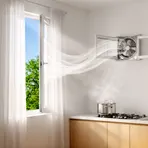
How Ventilated
 8
1.0
8
1.0


- Specialized
6
3.8
- Specialized
19
3.9
Surface Forms
Morphology
dead-air + space
The phrase is transparently compositional: 'dead' (inactive/stagnant) + 'air' (the gas) + 'space' (an area) yields an area of stagnant or non‑circulating air. Although used in technical contexts, this adjective–noun combination follows normal English compounding patterns, so a B1 learner who knows the constituents can infer the meaning.
Etymology
Dead-air space comes from the simple image of a small pocket of air that is dead — not moving — inside a space. That still air traps heat and stops air from moving, so people began to call any area with no airflow a 'dead-air space', which is why the phrase means an area with no air circulation.