
dance of death
 1
9.9
1
9.9

- noun
- /dæns əv dɛθ/
- Literature
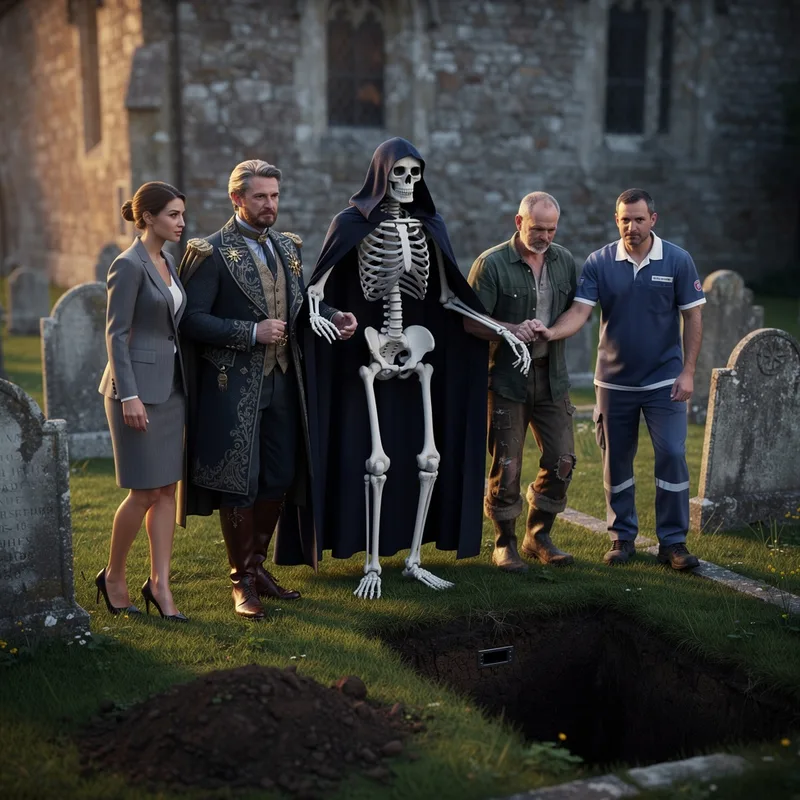
- The play included a scene illustrating a dance of death, showing how death claims everyone regardless of their status.
Examples
-
In medieval art, the dance of death symbolizes the inevitability of mortality, featuring figures from all walks of life.
-
His body does a grotesque dance of death.
Fiction book (1990) -
Yet another dance of death unfolds.
Academic text (1991) -
- Helen McCloy, Dance of Death
Blog text (33) -
Goddess Kali and the dance of death.
Fiction book (1990) -
It is enough to be even a descendant of one of those who participated in this dance of death, and we find our parts waiting for us.
Academic text (1992) -
"Metamorphosis—the dance of death unto life unto death," Harkon explained.
Fiction book (1992) -
The painting depicts a procession in a dance of death, where skeletons lead people of different social statuses toward the grave.
Synonyms

A picture or story that shows Death leading people from every social level to the grave
Surface Forms
Morphology
dance + of + Death
The components 'dance' + 'of' + 'Death' transparently signal a dance associated with death, so a B1 learner who knows the words can infer it refers to some kind of dance involving death. However, the particular cultural/allegorical meaning (the medieval personified-Death procession and its moral/ritual significance) is not derivable from the words alone and requires background knowledge, so the expression is only partially predictable.
Etymology
The phrase dance of death comes from old pictures where a skeleton called Death leads kings, workers, and children in a dance, showing people of every class walking to the grave. These images, common after a terrible plague, reminded people that 'death' comes for everyone, so the phrase now means a strong reminder that everyone will die.