
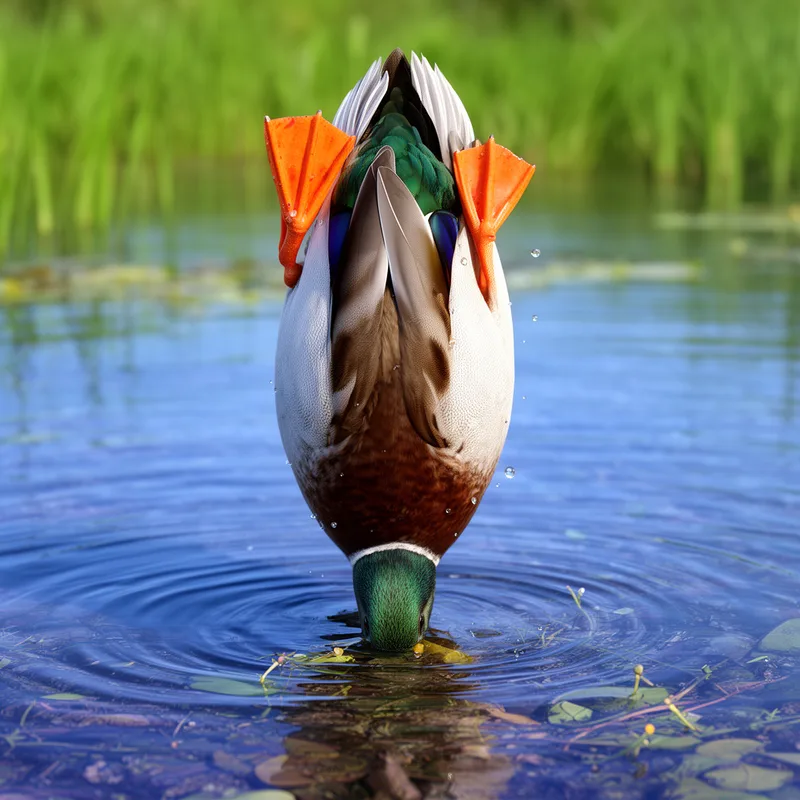
dabbling duck
- noun
- /ˈdæblɪŋ dʌk/
- The Mallard is a well-known dabbling duck commonly seen in city parks and ponds.
Examples
-
Unlike diving ducks, a dabbling duck feeds by tipping its head underwater while its tail remains above the surface.
-
Many species of dabbling duck can be found in marshes and wetlands across North America.
-
The dabbling duck swam gracefully in the pond.
-
Many dabbling ducks were spotted near the riverbank.
-
The pond was filled with various species of dabbling ducks that foraged for food by tipping their bodies into the water.
-
During the spring, we often spotted dabbling ducks swimming near the shore, searching for insects and plants.
-
In wetlands across the country, many dabbling ducks can be seen skimming the surface to catch small fish and crustaceans.
Synonyms
A shallow-water duck that feeds by tipping forward to reach plants
Antonyms


Surface Forms
Morphology
The meaning is directly compositional: 'dabbling' describes the action of dabbling and when combined with 'duck' yields a duck that feeds by dabbling in shallow water. This participle + noun pattern is a common, predictable construction and a B1 learner who knows both words can infer the intended meaning.
Etymology
Dabbling duck comes from the way the bird eats: the word dabbling shows the bird 'dabbles' by tipping its head into shallow water while its tail stays above the surface, and duck is the bird itself. So, dabbling duck means a duck that eats at the water's surface instead of diving.