
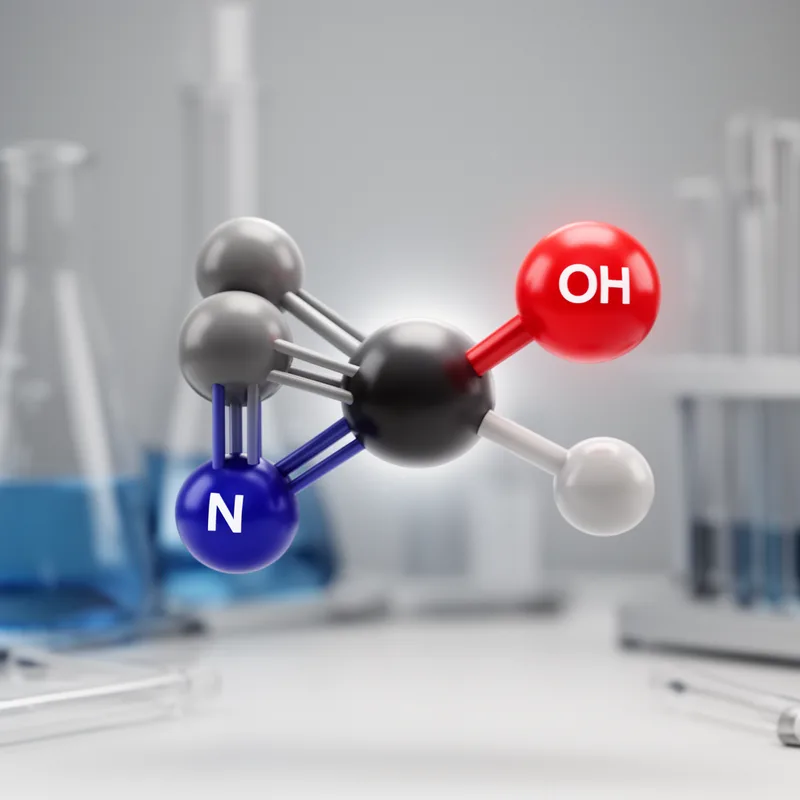
cyanohydrin
- noun
- /ˌsaɪənoʊˈhaɪdrɪn/
- Specialized
- Adding hydrogen cyanide to an aldehyde produces a cyanohydrin.
Examples
-
The chemist synthesized a new cyanohydrin in the lab.
-
Acetone cyanohydrin is used in the production of methyl methacrylate.
-
The formation of a cyanohydrin is an important step in some organic synthesis reactions.
-
A cyanohydrin can be formed through the reaction of aldehydes.
-
In organic chemistry, a cyanohydrin is formed when an aldehyde reacts with hydrogen cyanide.
-
The chemist demonstrated the creation of a cyanohydrin by combining a ketone with cyanide.
-
A cyanohydrin plays a critical role in various synthetic pathways for producing fine chemicals.
Surface Forms
Morphology
cyanohydrin = cyano + hydrin (transparent) = cyano + hydrin
The term is directly built from the two chemical combining forms 'cyano' and 'hydrin', so its meaning is compositional for learners familiar with these technical components.
Etymology
The word cyanohydrin joins cyano- (from cyan, meaning 'blue') and -hydrin (from hydro, meaning 'water' or 'hydrogen'). So a cyanohydrin is a molecule that has a cyanide group –CN and a hydroxyl group –OH on the same carbon, which is why the name points to both parts.

