
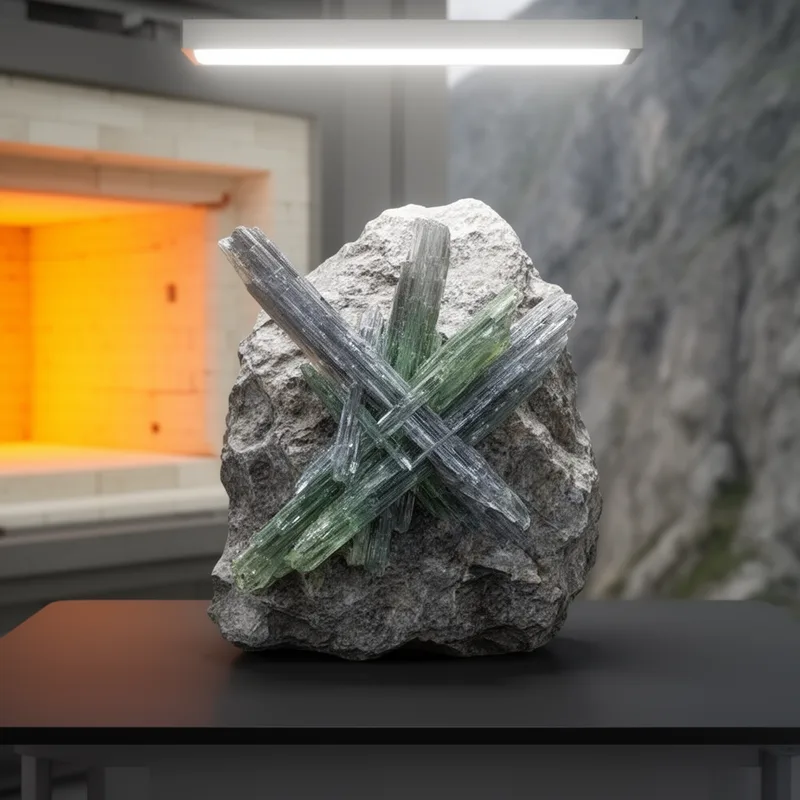
cyanite
- noun
- /ˈsaɪəˌnaɪt/
- Specialized
- The high melting point of cyanite makes it valuable for use in refractory products.
Examples
-
Geologists discovered large deposits of cyanite in the mountain range.
-
The geologist discovered a large deposit of cyanite in the mountains.
-
A specimen of cyanite showed a brilliant blue color under the light.
-
Can you identify cyanite among these minerals?
-
Geologists discovered large deposits of cyanite in the mountain range, known for its unique properties.
-
A specimen of cyanite exhibited a striking blue hue, showcasing its characteristic color.
-
The high melting point of cyanite makes it an essential material in the manufacturing of heat-resistant ceramics.
Synonyms



 1
9.9
A hard blue or greenish-blue stone people use in heat-resistant ceramics and jewelry
Surface Forms
Morphology
Etymology
The word cyanite comes from the Greek kyanos, meaning 'dark blue', and the mineral ending -ite. You can see the same root in the colour word cyan, so cyanite simply means a 'blue mineral', which matches its usual colour and name.