
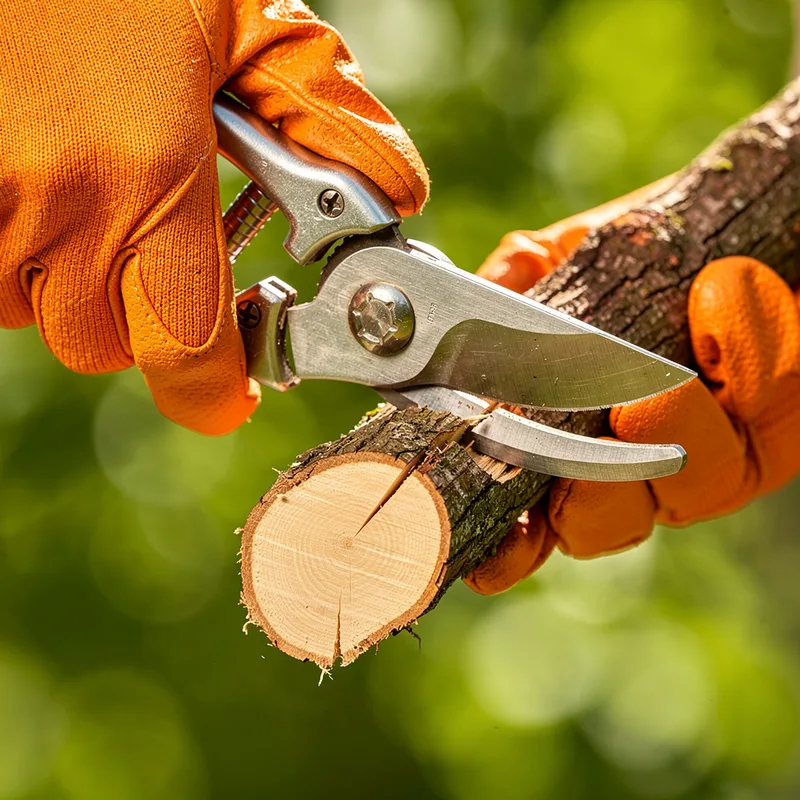
cutting off
 24
5.1
24
5.1

- noun
- /ˈkʌtɪŋ ɔf/
- His cutting off the damaged section of the tree was crucial for its recovery.
- cutting off the flow
- cutting off the hand
Examples
-
The gardener focused on the cutting off of the dead branches to encourage new growth.
-
You will then enter from the far door, cutting off any means of escape.
-
Turning, she saw them settle on the road behind her, cutting off any escape.
Fiction book (1994) -
But the latter was not a sufficient reason for cutting off contact with him.
Fiction book (1993) -
Fire was extinguished by cutting off the oxygen supply.
Academic text (2007) -
To compound the problem, the government agricultural-extension services collapsed for want of funds, cutting off a source of advice.
Academic text (2000) -
The green strand of air tightened around me, cutting off my breath.
Fiction book (2000) -
The chef is responsible for the precise cutting off of the meat before serving it.
Synonyms
 19
1.1
19
1.1
A small piece cut off from grass or hair
 13
6.9
13
6.9
An operation to remove part of the body or tissue
 2
7.9
2
7.9
A medical operation that cuts out tissue or a growth
 2
5.8
2
5.8
Cutting something so it becomes separate
 1
7.3
1
7.3
Making something shorter by cutting off a part
An act of cutting something off, naturally or by surgery
How Severe

Surface Forms
Morphology
The meaning 'the act of removing something by cutting' is directly and predictably built from 'cut' (to sever or remove by cutting) plus 'off' (indicating removal/separation). This verb+particle composition is a common, productive pattern in English (and mirrored in many other languages), so a B1 learner who knows the constituents can readily infer the MWE's meaning.
Etymology
Cutting off comes from the image of using a knife or saw to cut something off, like a branch or a wire, so it becomes separate. That's why it means the act of 'removing' by cutting or of 'stopping' something, as in the cutting off of electricity or communication.