
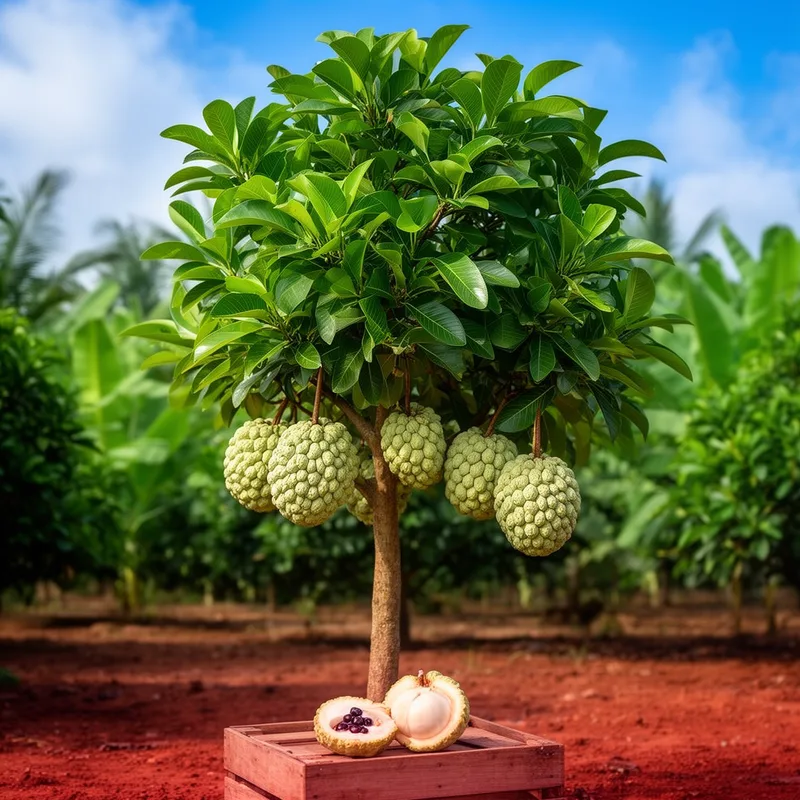
custard apple tree
- noun
- /ˈkʌstərd ˈæpl tri/
- UK
- We planted a custard apple tree in our backyard to enjoy fresh fruit every season.
Examples
-
The custard apple tree thrives in warm, humid climates with plenty of rainfall.
-
Farmers in South America often cultivate the custard apple tree for its delicious fruit.
-
The custard apple tree is native to tropical America.
-
Many gardeners plant custard apple trees for their delicious fruit.
-
Farmers in South America often cultivate the custard apple tree for its delicious fruit.
-
We planted a custard apple tree in our backyard to enjoy fresh fruit every season.
-
The custard apple tree thrives in warm, humid climates with plenty of rainfall.
Synonyms
A sweet, soft fruit from a tropical tree that you eat fresh

A tropical tree that makes sweet fruit with a thick scaly skin

A small tropical tree that produces a rough, heart-shaped, sour fruit eaten as a custard apple
How Big
- UK

 16
2.7
16
2.7

Surface Forms
Morphology
The compound is fully compositional: 'custard' modifies 'apple' to indicate an apple-like fruit with custard-like pulp, and adding 'tree' denotes the plant that bears that fruit. This straightforward modifier+noun structure is a common, predictable pattern, so a B1 learner who knows the constituents can infer the meaning.
Etymology
Custard apple tree is named after its fruit: the soft, creamy pulp inside the fruit reminded people of custard, and the fruit looked a bit like an apple, so the tree came to be called a custard apple tree.