
curlycup gumweed
- noun
- US
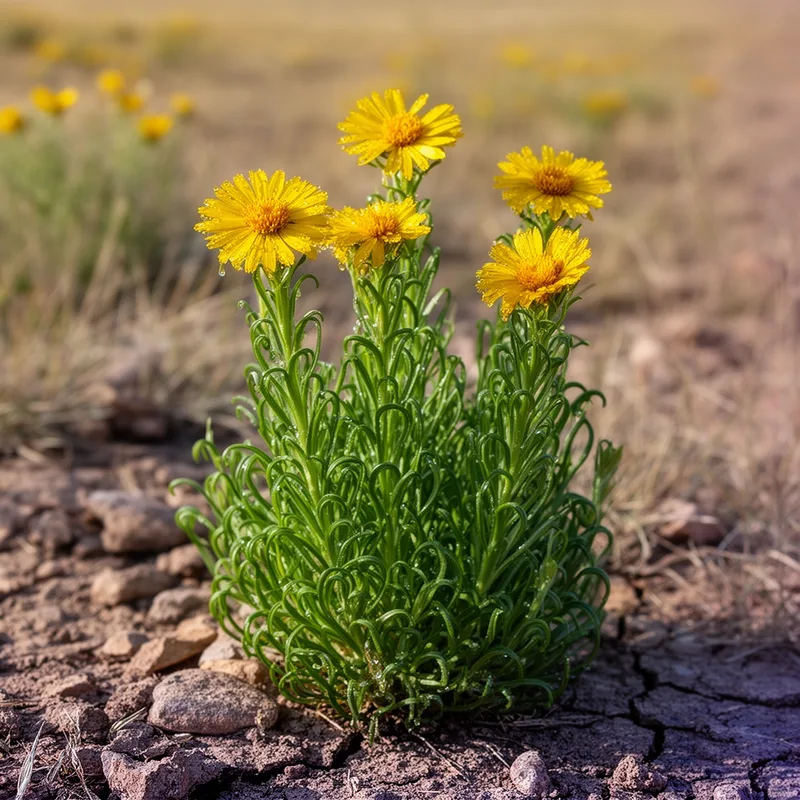
- When hiking on the prairie, we noticed patches of curlycup gumweed with their distinctive yellow blooms.
Examples
-
The curlycup gumweed thrives in areas with poor, rocky soil across the Midwest.
-
While walking through the prairie, we spotted clusters of curlycup gumweed with bright yellow flowers blooming in the sunlight.
-
Researchers studied the medicinal properties of curlycup gumweed in traditional Native American remedies.
-
The curlycup gumweed blooms beautifully in the spring.
-
Many curlycup gumweeds thrive in disturbed areas.
-
The curlycup gumweed is commonly found in disturbed ground, especially following construction projects.
-
Farmers often plant curlycup gumweed in their fields because it helps attract pollinators.
Synonyms

A perennial plant with yellow flower heads and sticky sap native to western and central North America

A western North American plant with sticky sap and yellow flowers that can poison livestock
Surface Forms
Morphology
curlycup + gumweed
The name is transparently descriptive: 'curlycup' can be parsed as curly + cup (indicating curled, cup-shaped bracts) and 'gumweed' denotes a resinous/weed-like plant, so together they point to a sticky plant with curled cup-like parts. This follows regular English compounding for plant names, so a B1 learner who knows the constituent words should be able to infer the general meaning.
Etymology
Curlycup gumweed: The name curlycup gumweed comes from two clear images: the flower has a cup of curled leaves, the curlycup, and the plant has a sticky, 'gum-like' sap, the gumweed. So the name describes the sticky, yellow-flowering plant you find on prairies.

