
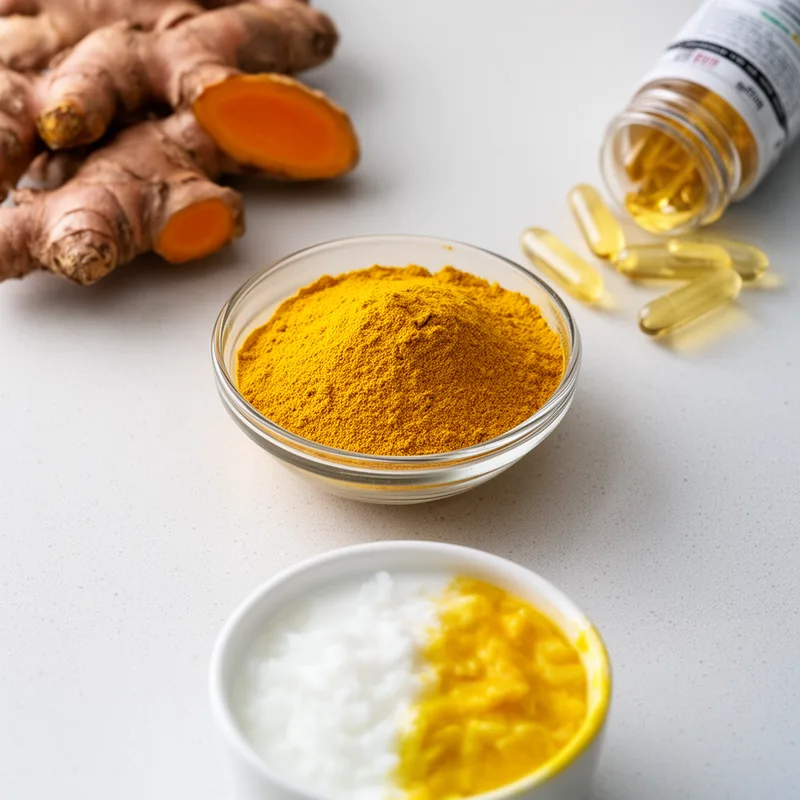
curcumin
 1
6.7

- noun
- /ˈkɜrkjʊmɪn/
- Specialized
- In spite of its superb pharmacological effects, clinical application of curcumin has been argued due to its relatively low systemic bioavailability.
- curcumin in turmeric
- a compound curcumin
- curcumin may help
Loading YouTube…
Watch on YouTubeTurmeric have curcumin, gingers has ginger alls.
- Turmeric have curcumin, gingers has ginger alls.
- Tons of anti inflammatories, a lot of turmeric, curcumin.
- So you will hear, for instance, that green tea extract, racy mushroom, pumpkin oil, zinc, curcumin, that all of these things can increase hair growth.
- The good news is, is those negative effects on DHT seem to reverse pretty quickly after is ceasing to take curcumin.
Examples
-
Another compelling study indicates that curcumin has potent anti-proliferative effects on both the established tamoxifen-resistant MCF-7 cells and their wild-type counterparts.
Academic text (2017) -
Bachmeier's research centers on curcumin, the polyphenol responsible for the characteristic color of curry.
Blog text (10) -
Traditional medicine has long used curcumin for its anti-inflammatory properties.
Blog text (10) -
Over the years, several preclinical studies have proposed curcumin as a natural product for both cancer prevention and treatment.
Academic text (2017) -
Several reports have shown the contribution of curcumin in the sensitization of cancer cells to chemotherapy drugs.
Academic text (2017) -
The next steps are to confirm curcumin's beneficial effects in controlled clinical tests.
Blog text (10) -
In these experimental conditions, curcumin was able to antagonize the hormone-resistant phenotype in endocrine-resistant cells and potentiate the anti-proliferative effects of tamoxifen in parental cells.
Academic text (2017) -
Curcumin is often used as a natural food dye because of its bright yellow color.
-
Many health supplements contain curcumin for its anti-inflammatory properties.
-
Research has shown that curcumin can have beneficial effects in cancer prevention.
Surface Forms
Etymology
The word curcumin comes from the Latin curcuma, which means 'turmeric', the yellow spice used in cooking. Curcumin is the yellow part of turmeric, so the name tells you it is the bright yellow compound used for color, food, and health products.