
curare
 4
9.9
4
9.9

- noun
- /kjʊˈrɑːreɪ/
- Specialized
 :
curare
:
curare
- The native people of the Americas influenced medicine by providing approximately two hundred important drugs, from quinine and curare to the first treatment for scurvy.
- curare poison
- curare dart
- curare-tipped arrow
They, they shoot the monkey with a curare tipped arrow.
- They, they shoot the monkey with a curare tipped arrow.
Examples
-
During exploratory tympanomastoidectomy, it was hypothesized that a small dural arteriovenous malformation not identified on previous tests was the cause of the tinnitus. However, there was a complete disappearance of the tinnitus during the administration of curare.
Academic text (1998) -
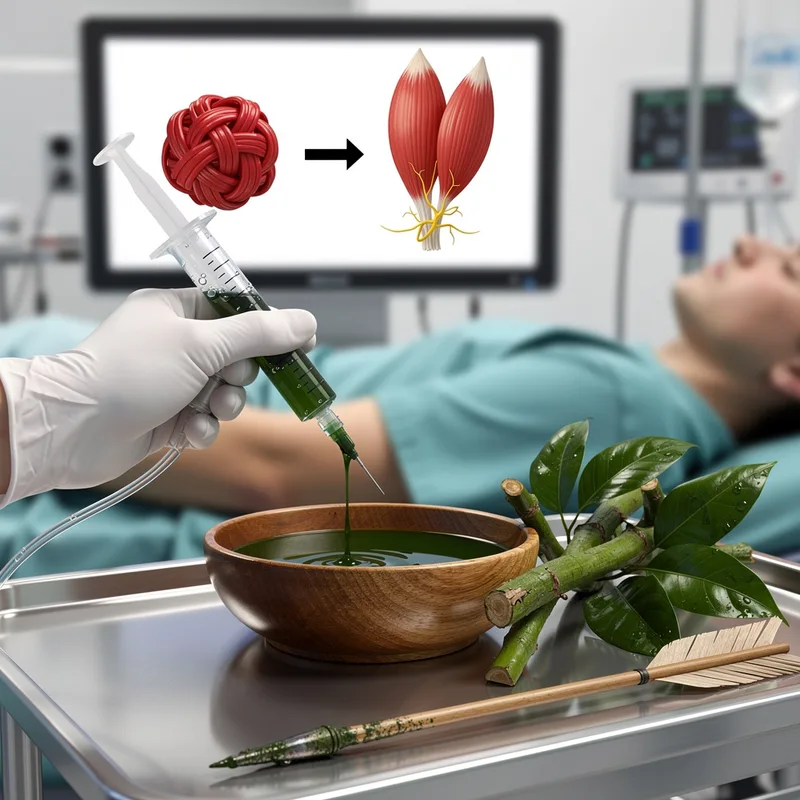
A toxic substance called curare is derived from certain plants and can cause muscle paralysis.
-
As I explained to Mrs. Johnson, the little girl's aunt... ...we hesitate in using a curare to diminish the spasms.
-
The decrease in tinnitus during curare administration was not foreseen by any of the authors.
Academic text (1998) -
The darts are tipped with curare, paralyzing if it gets in the blood.
Fiction book (1991) -
In medical practice, curare is often used as a muscle relaxant during surgeries.
-
The indigenous people skillfully used curare on their arrows to immobilize large animals for hunting.
Synonyms
 1
9.9
1
9.9
A poisonous chemical from South American plants used to relax muscles during surgery
Surface Forms
Etymology
The word curare comes from a native South American name for a plant poison that people put on their arrow tips when hunting. Although it looks like the Latin curare meaning 'to care for' or the English word 'care', Europeans borrowed the native name for that poison, and today curare is known in medicine as a drug that makes muscles relax.