
cucurbitaceous
9.9
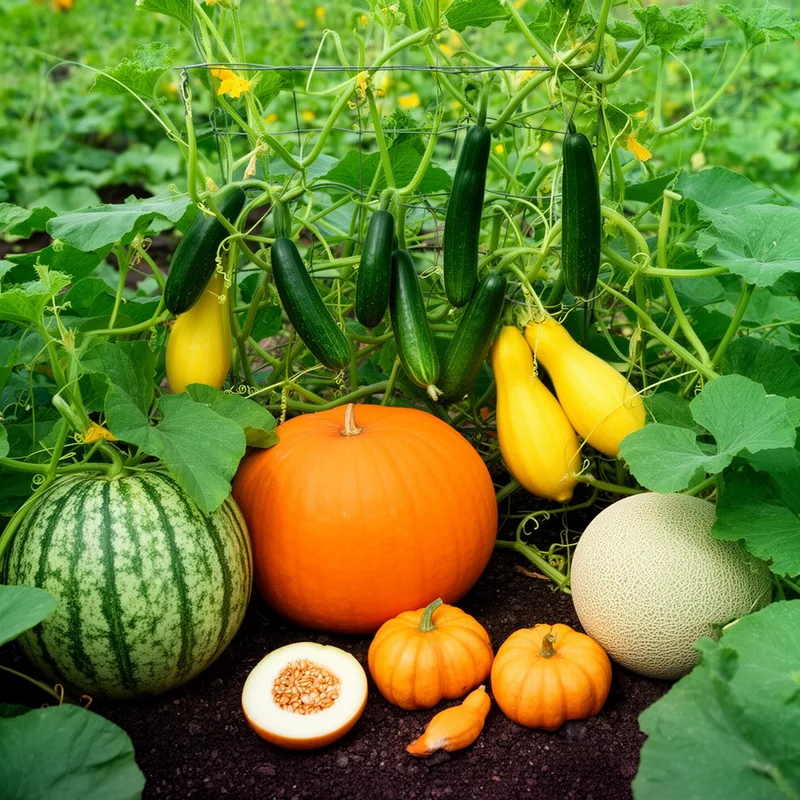
About plants like pumpkins, cucumbers, squashes and melons
- adjective
- /ˌkjuːkərˈbeɪʃəs/
- Specialized
:
cucurbitácea
- The pumpkin is a cucurbitaceous vegetable widely cultivated around the world.
Examples
-
She specializes in the study of cucurbitaceous crops such as melons and squashes.
-
The cucurbitaceous plants in my garden are thriving.
-
Many cucurbitaceous plants are grown for their edible fruits and seeds.
-
Are cucurbitaceous vegetables your favorite?
-
Many cucurbitaceous plants are grown for their edible fruits and seeds.
-
She specializes in the study of cucurbitaceous crops such as melons and squashes.
-
The cucurbitaceous plants in my garden are thriving.
Surface Forms
cucurbitaceous positive
Morphology
Etymology
Cucurbitaceous comes from the Latin cucurbita, meaning 'gourd', and the ending -aceous, meaning 'like' or 'related to'. So, cucurbitaceous describes plants 'like' gourds — the group that includes cucumbers, squashes, melons, and pumpkins.

