
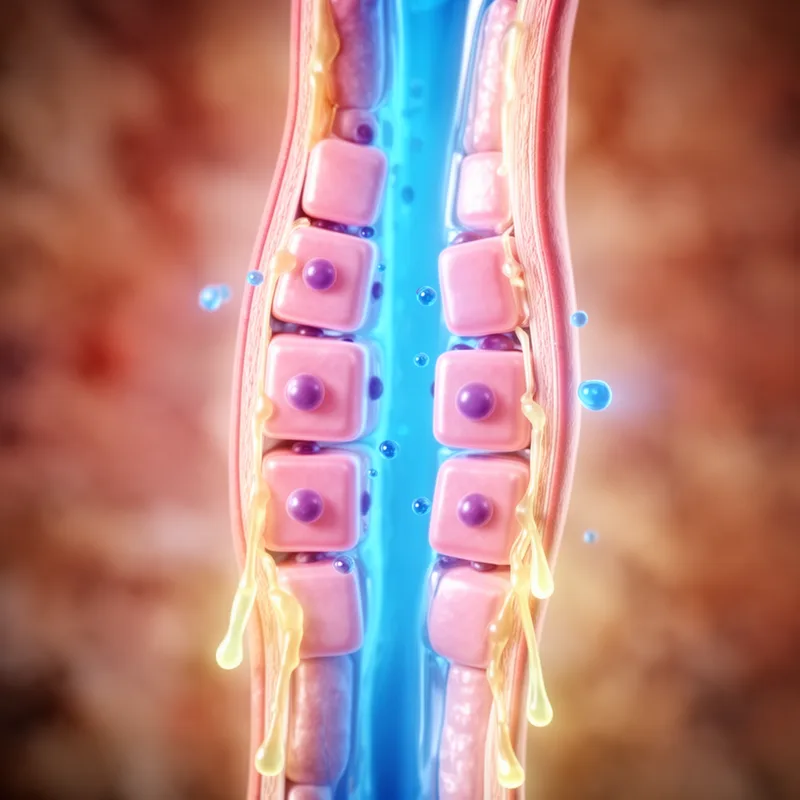
cuboidal epithelial cell
- noun
- /kjuˈbɔɪdəl ˌɛpɪˈθiːliəl sɛl/
- Specialized
- Kidneys contain many cuboidal epithelial cells that help with absorption and secretion.
Examples
-
Many cuboidal epithelial cells are found in the thyroid gland.
-
Under the microscope, the cuboidal epithelial cell appeared perfectly square from the side.
-
Damage to the cuboidal epithelial cell layer can affect glandular function.
-
The cuboidal epithelial cell plays a vital role in secretion.
-
The cuboidal epithelial cell is crucial for efficient secretion in many exocrine glands.
-
In certain tissues, the cuboidal epithelial cells form a protective barrier while facilitating absorption.
-
Observing the cuboidal epithelial cell under a microscope revealed its distinct cube-like shape.
Synonyms

A cell shaped like a small cube that lines glands and ducts
How Tall
- Specialized

- Specialized
- Specialized
 1
5.8
1
5.8

Surface Forms
Morphology
cuboidal + epithelial + cell
The phrase is a straightforward compositional noun phrase: 'cuboidal' (cube-shaped) + 'epithelial' (relating to surface tissue) + 'cell' (microscopic unit), so the overall meaning — an epithelial cell that is roughly cube-shaped — is directly derivable from the constituents. This adjectival modification pattern is regular in English and common cross-linguistically, so a B1 learner who knows the component words would readily understand it.
Etymology
Cuboidal epithelial cell names a surface cell that looks like a small 'cube' under the microscope. Cuboidal means cube-shaped and epithelial means the 'lining' of an organ, so the name explains why these cube-like lining cells sit in glands and ducts to help take in and send out substances.