
cryopathy
- noun
- /kraɪˈɒpəθi/
- Specialized
- Early symptoms of cryopathy include tingling and numbness in the affected area.
Examples
-
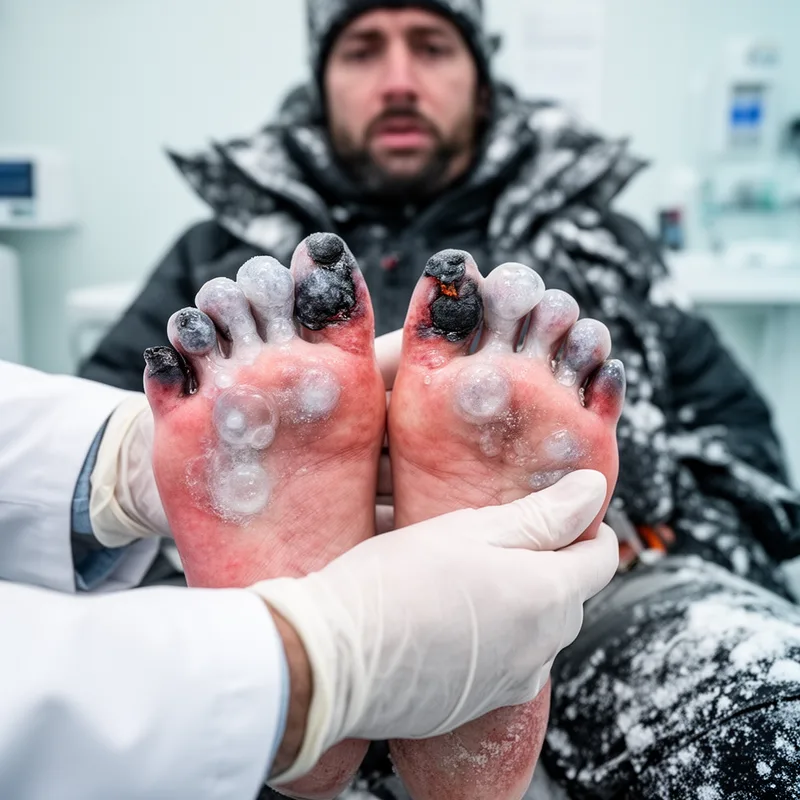
Frostbite is a common form of cryopathy affecting people exposed to extreme cold.
-
Early symptoms of cryopathy include tingling and blistering in the affected area.
-
Doctors diagnosed the mountaineer with cryopathy after examining his discolored toes.
-
The patient was diagnosed with cryopathy after exposure to extreme cold.
-
Many cases of cryopathy can lead to serious complications.
-
Doctors diagnosed the mountaineer with cryopathy after examining his discolored toes.
-
Frostbite is a serious form of cryopathy that can result in tissue damage.
Synonyms

 35
4.4
35
4.4

Damage to skin and other body parts caused by very cold weather
Surface Forms
Morphology
cryopathy = cryo + pathy (opaque) = cryo + pathy
Although built from the recognizable combining forms 'cryo-' (cold) and '-pathy' (disease), average B1 learners are unlikely to know these medical morphemes and so cannot reliably infer the meaning.
Etymology
Cryopathy comes from the Greek root cryo- meaning 'cold' and the ending -pathy meaning 'disease'. So, cryopathy is a 'cold disease' caused when freezing damages skin or tissue, like very bad frostbite.