
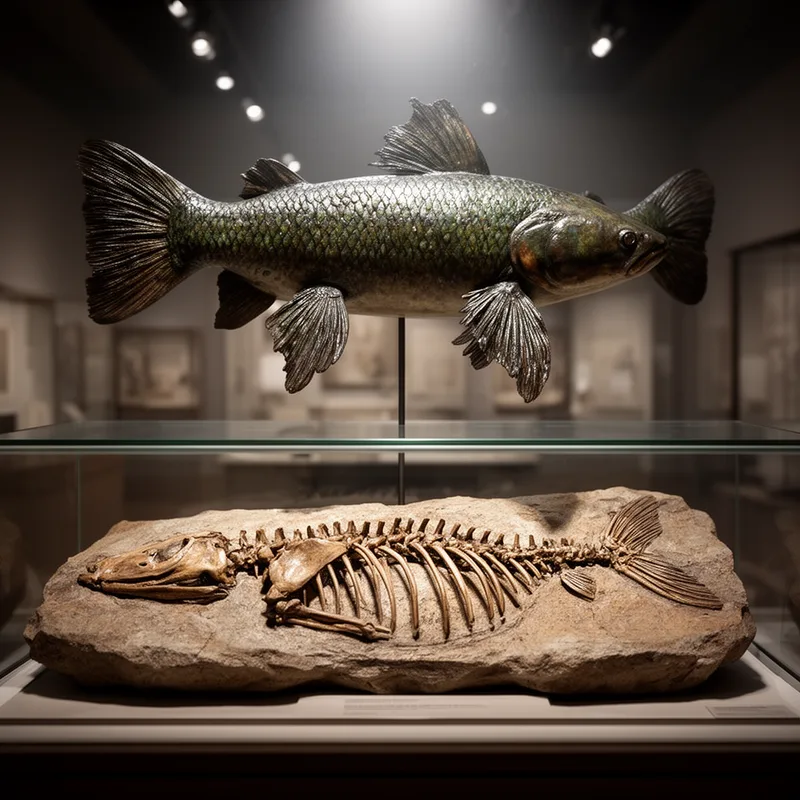
crossopterygian
- noun
- /ˌkrɔsəˈtɛrɪdʒən/
- Specialized
- Scientists often study crossopterygians to understand the transition from aquatic to terrestrial life.
Examples
-
The discovery of a crossopterygian fossil shed new light on the evolution of land vertebrates.
-
The crossopterygian fish lived millions of years ago.
-
The crossopterygian lineage includes some of the earliest creatures with limb-like fins.
-
Many fossils of crossopterygians have been discovered in Africa.
-
The crossopterygian is known from fossils that reveal its unique lobe-finned structure.
-
Scientists study the crossopterygian to understand the evolution of vertebrates.
-
The fossils of the crossopterygian provide important insights into ancient marine ecosystems.
Synonyms

A mostly extinct fish with fleshy, lobed fins that look like small limbs
Surface Forms
Etymology
Crossopterygian comes from Greek parts krossoi meaning 'fringe' and pteryx meaning 'fin' or 'wing'. The pteryx part is the same root you see in pterodactyl, which helps you remember 'wing' or 'fin'. So a crossopterygian is a fish with lobed, 'fringed' fins that look a little like limbs, which is why these fossil fishes are linked to the first animals that moved from water to land.

